The unity of Christians in Jerusalem begins every day
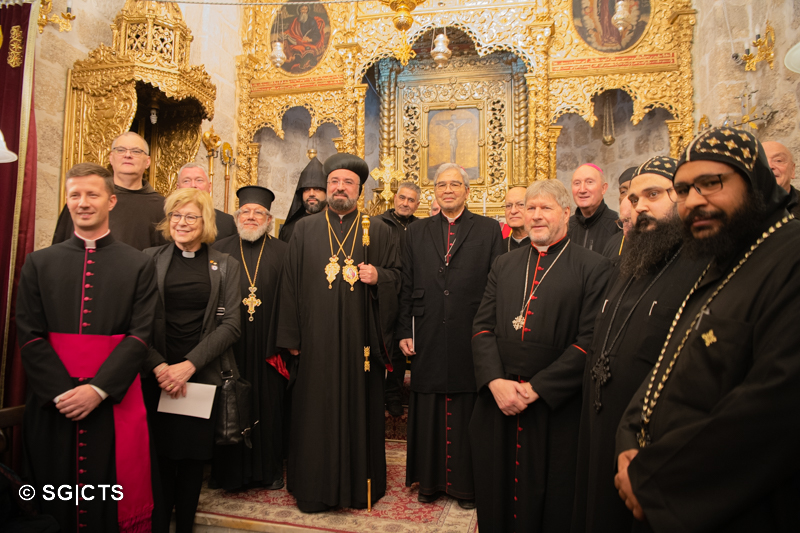
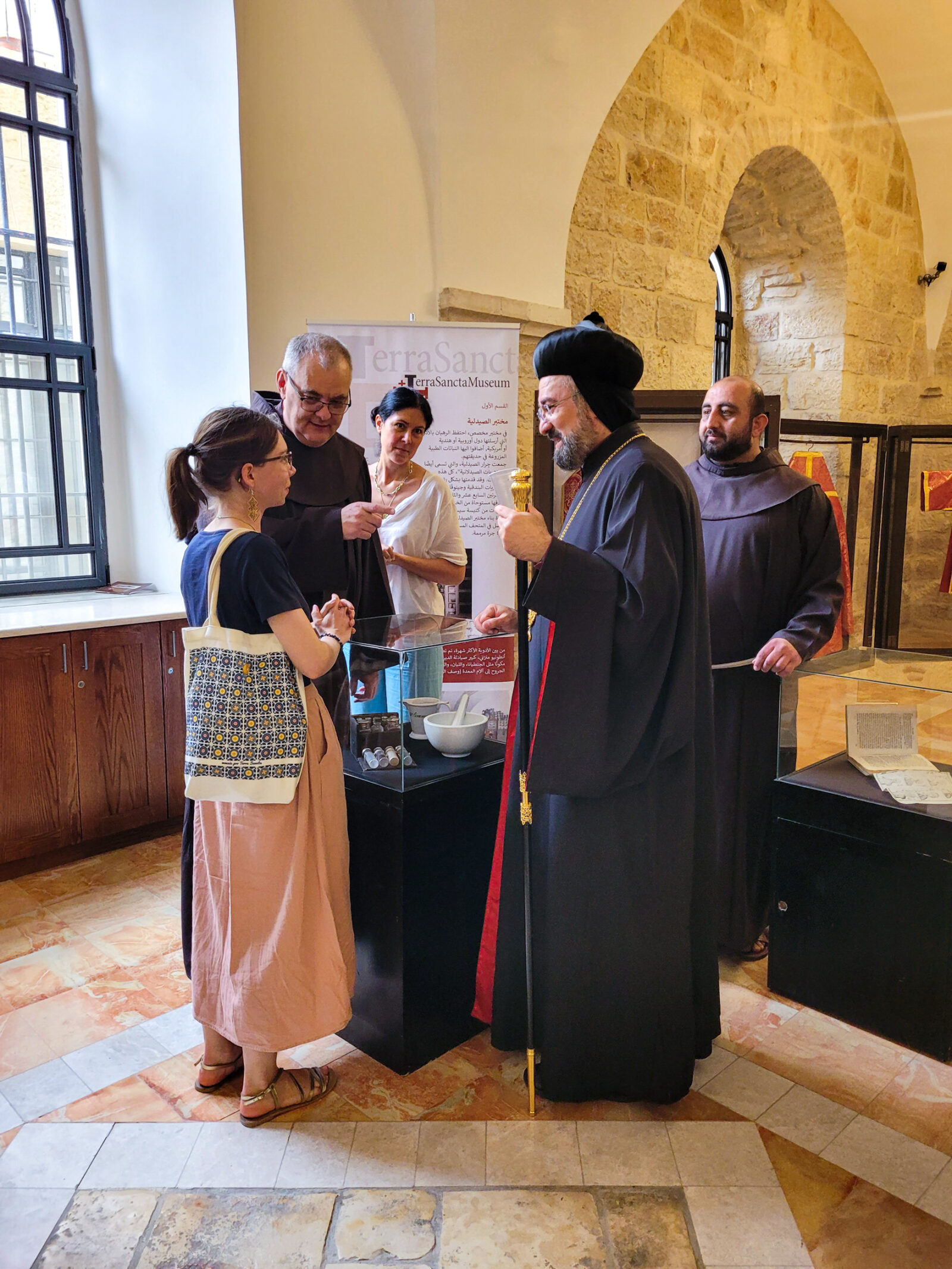
Brother Stéphane Milovitch has lived in the Holy Land for 34 years, serving in Bethlehem at the Basilica of the Nativity and later in Jerusalem at the Convent of St Saviour. In Jerusalem, he was president of the Holy Sepulchre for three years and a long-time member of the Patriarchal Commission for ecumenical dialogue.Born in France and Franciscan by vocation, his life between Bethlehem and Jerusalem led him to share daily life with the Eastern Churches. Through this experience, he learned that ecumenism is rooted in lived relationships rather than theory. As he affirms, “In order to dialogue, one must love first”. Today, as Chairman of the board of directors of the Terra Sancta Museum Art & History, he sees this coexistence as the foundation of museum’s vision.
When you arrived in the Holy Land as a friar, what were your ideas or expectations regarding ecumenism?
Ecumenism already had a meaning for me, although before coming to the Holy Land I had had little contact with the Eastern Churches and only some with Protestants. In Europe, in fact, Protestants largely share the same culture as Catholics, despite theological differences. Thus, although we are separated, we are culturally very similar. In Jerusalem it was a small shock: there was no common language or culture. At first glance, I saw Churches that almost seemed to be in conflict with one another.
You were superior at the Basilica of the Nativity in Bethlehem and later at the Holy Sepulchre in Jerusalem. What did you learn from others in everyday life?
The Friars are the custodians of the Holy Places. The Eastern Churches share with us two Holy Places: the Nativity and the Basilica of the Holy Sepulchre. The Church of the early centuries—“Eastern” in character—has a theology much more closely tied to Christ as true God and true man, but above all to Christ in his divinity. From the Middle Ages onward, especially with the Franciscans, attention in the Latin world increasingly focused on the humanity of Christ—his suffering, his fatigue, his daily life—in other words, a God who fully shares our human experience.
But dialogue is not about attending theological conferences; it is a daily exchange. Here in Jerusalem, every year we exchange greetings with the Eastern Churches during our respective feasts, on occasions that may seem formal but can become authentic spaces of encounter, courtesy, and affection. Living in the Holy Places has shown me a real atmosphere of welcome—such as the invitation I received this year to teach Latin at the Greek Orthodox seminary!
What does the city of Jerusalem tell us about ecumenism?
Jerusalem does not divide Christians. The Church was born at Pentecost already complex and plural, full of different cultures: Mandaeans, Greeks, Jews, and others. The Holy Spirit descended upon this city, and there was no division. It was only later—from Ephesus to Chalcedon, through the schism of 1054 and the Reformation of 1517—that a series of councils and ruptures progressively tore the Church apart.I like to say—and I believe this is objectively true—that today in Jerusalem people who are divided elsewhere live together. I came to understand that true ecumenism is born from dialogue between deeply rooted identities, as happens at the Holy Sepulchre, where each Church prays in its own language. In the past, I saw this diversity as an “otherness” that made dialogue difficult, but in reality it is important that everyone be authentic, because if everyone renounces who they are, then dialogue becomes false, limited to the surface. We must not be afraid to be who we truly are. This applies to ecumenical dialogue, but also to dialogue outside the Church, to interreligious dialogue.
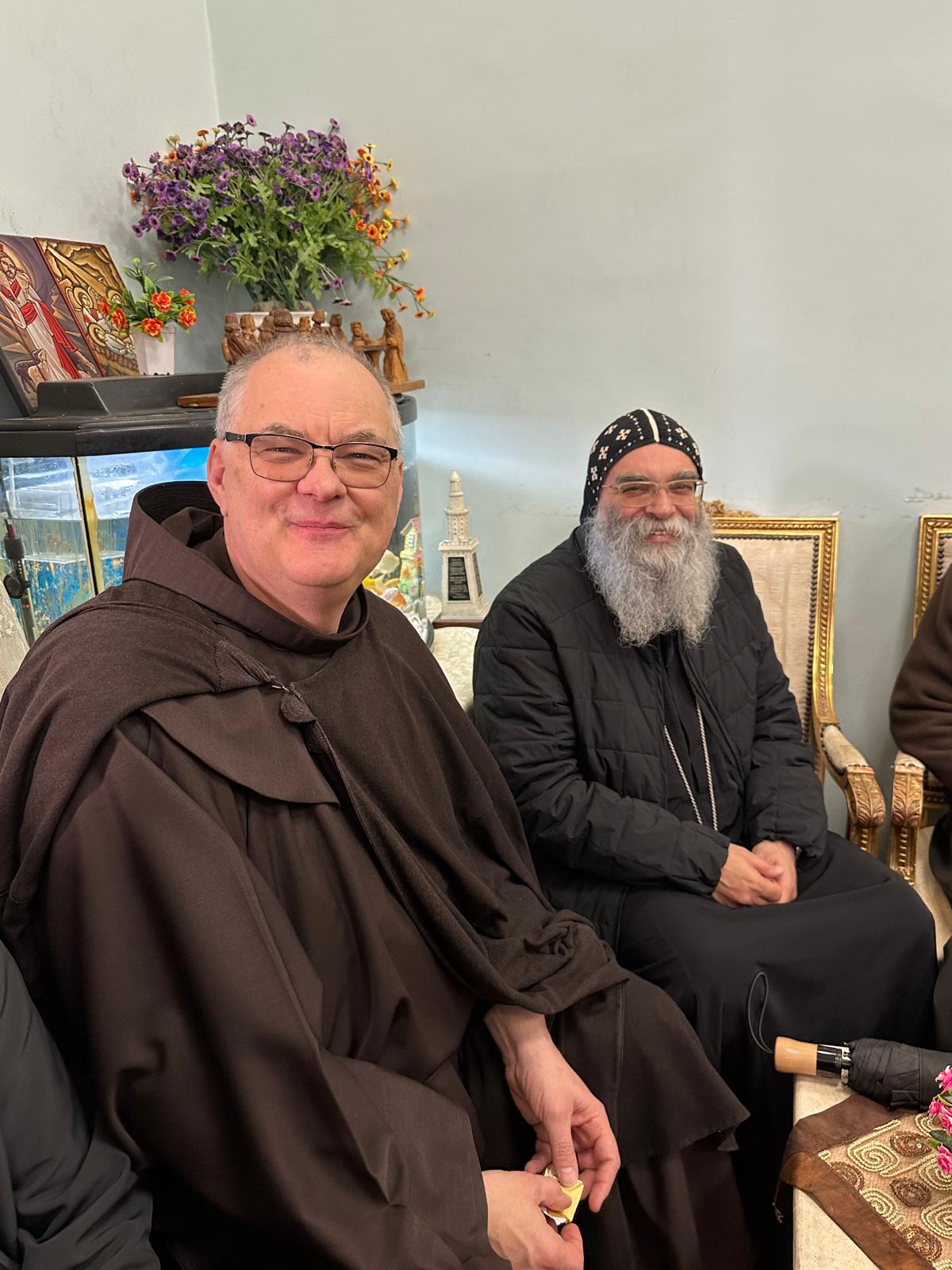
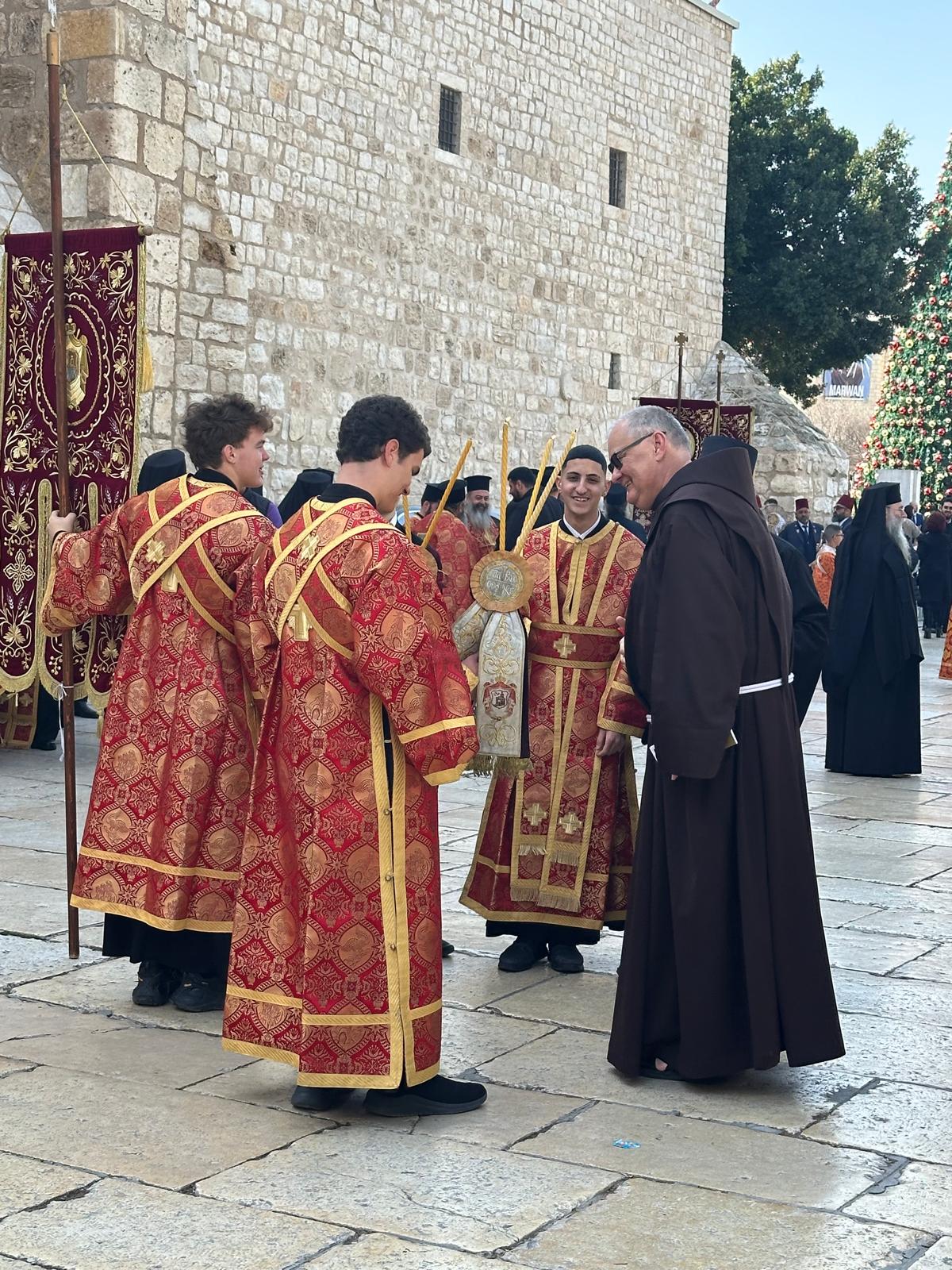
The Church of Jerusalem is beautiful: it is a local Church and, at the same time, profoundly universal. Arabs, Jews, Indians, Filipinos, Africans are all part of it, just as in the time of the Apostles. For this reason, Jerusalem is more than just one Church among others: it is a true epiphany of the Church of Christ.
You became part of the Commission of the Diocese of Jerusalem for ecumenical dialogue. How does your Franciscan charism help you in this role?
In ecumenical dialogue I must not seek what I presume I will find. The right attitude is to welcome what I encounter, to value it, and to discover within it the common core, which is far greater than we often imagine. Ecumenism requires this humility: to rejoice in what is truly found, not in what one expects to find.
The Franciscan charism helps along this path because it trains one to live the universality of the Church. Communities such as that of Jerusalem—with friars from very different countries and traditions—learn to dialogue and live together, welcoming otherness without fear.
Later, the Terra Sancta Museum project was launched and you took on the role of President of the Board of Directors on behalf of the Custody. How do you experience this ecumenical openness within this project?
Although the project starts from a predominantly Latin heritage, it also aims to highlight works belonging to other ecclesial traditions. In the future, we would like to initiate exchanges with other communities, lending and hosting works through temporary exhibitions; for us, this would be very important.
As I said earlier, there is a local Church and a universal Church, and this is exactly how we conceived the division of the Art & History sections of the Terra Sancta Museum. The local Church here is rich in icons, rich in local artists and iconographers, which is why there will be a section specifically dedicated to them. The other part will be dedicated to the gifts offered to the Custody of the Holy Land by monarchies and foreign countries, representing the universal Church. This is the project: to be more than a simple museum, but rather to build a space for encounter and authentic knowledge of the many faces of the Church present here, through art. This is how my friendship with some Orthodox and Armenian colleagues—who, like me, work in the field of art—was born. It is important to walk together in order to enrich one another.
The theme of the Week of Prayer for Christian Unity 2026 speaks of hope. Many today claim that this dialogue is useless, that the differences are too great. What would you say to them?
It is necessary to cultivate hope and the responsibility to build communion, first of all within the Latin Church itself and within local communities. True unity is not born only from dialogue “outwards,” but above all from a communion lived “within” everyday relationships. Often, however, the desire for communion is distorted by the attitude of those who hope that the other will become like themselves. Authentic communion requires humility.