Enabel supports the sustainable future of the Terra Sancta Museum Art & History
At the heart of the environmental strategy for the future Terra Sancta Museum is a simple principle: to work with the historic building, rather than transform it. The approach is led by Perrot & Richard, with engineer Gildas Geffroy: his mission is to implement the most suitable ventilation system, and he must therefore determine how to maintain a stable environment.
The starting point is the building itself. Monitoring carried out across all four seasons, with nine indoor sensors and one outdoor reference sensor, provided around 370 days of data on how the historic spaces respond to their environment. The results show a remarkable thermal inertia: daily temperature variations are around 1°C inside, compared with around 6°C outdoors.
These findings support an approach based on working with the building’s existing environmental behaviour, using controlled natural ventilation rather than imposing a completely new climate through extensive technical systems. Chosen for its less invasive and more ecological approach, natural ventilation allows the historic building to remain largely intact, without altering its existing structure. While this method is less commonly used outside Europe, it was deliberately selected for the future museum. Managing the relationship between the interior and the external environment is therefore essential to preparing the historic spaces for their future role as a museum.
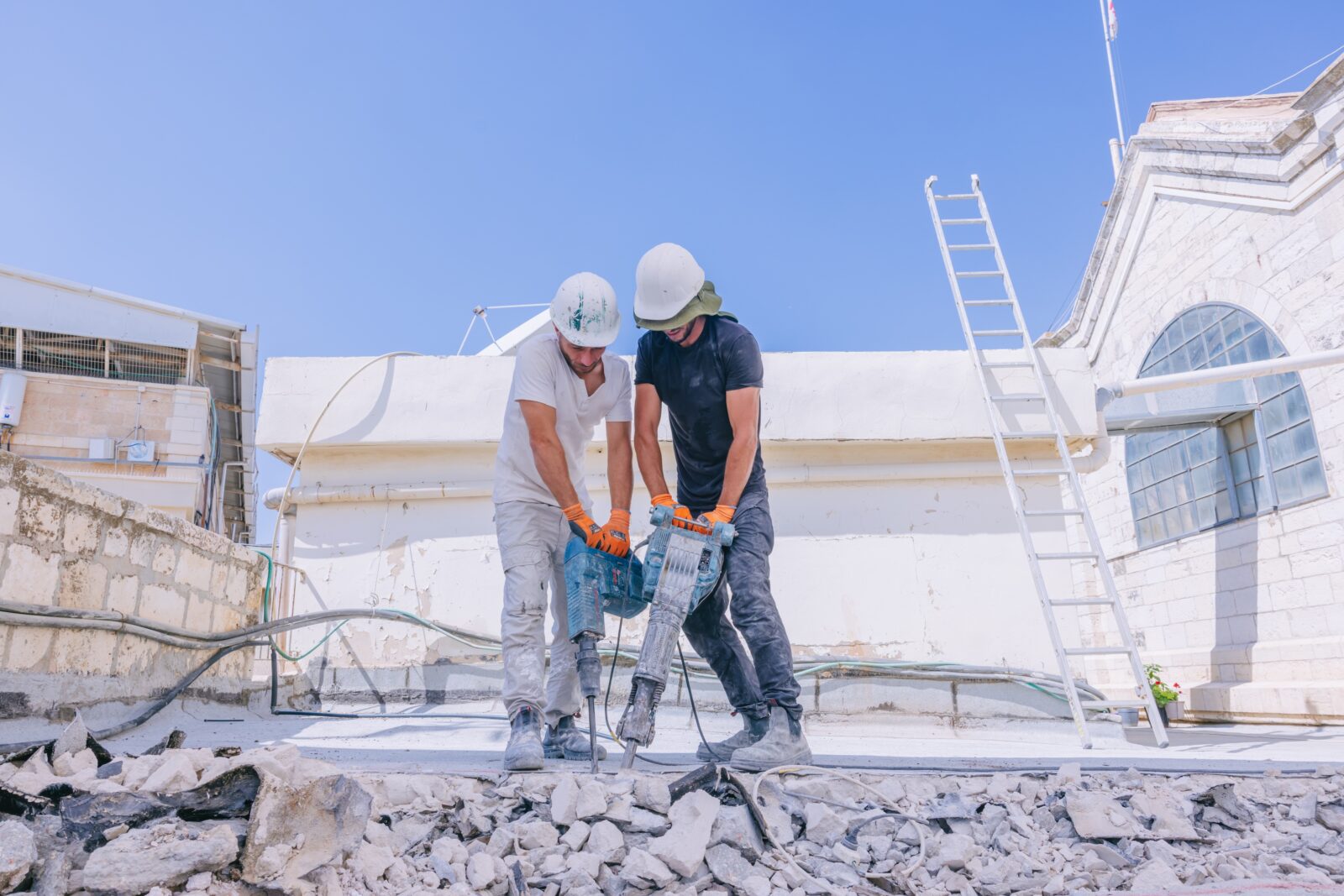
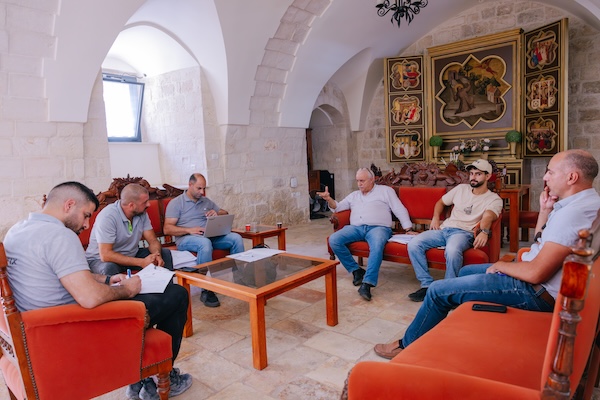
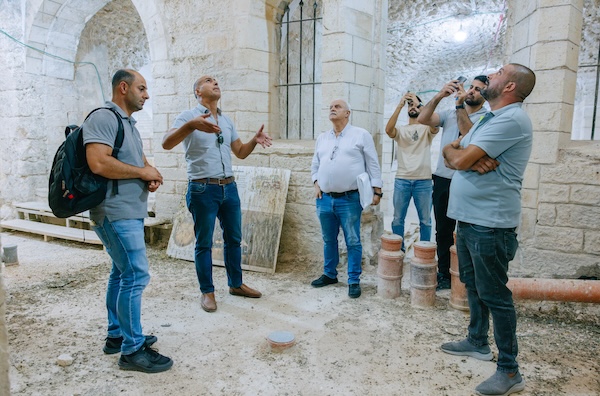
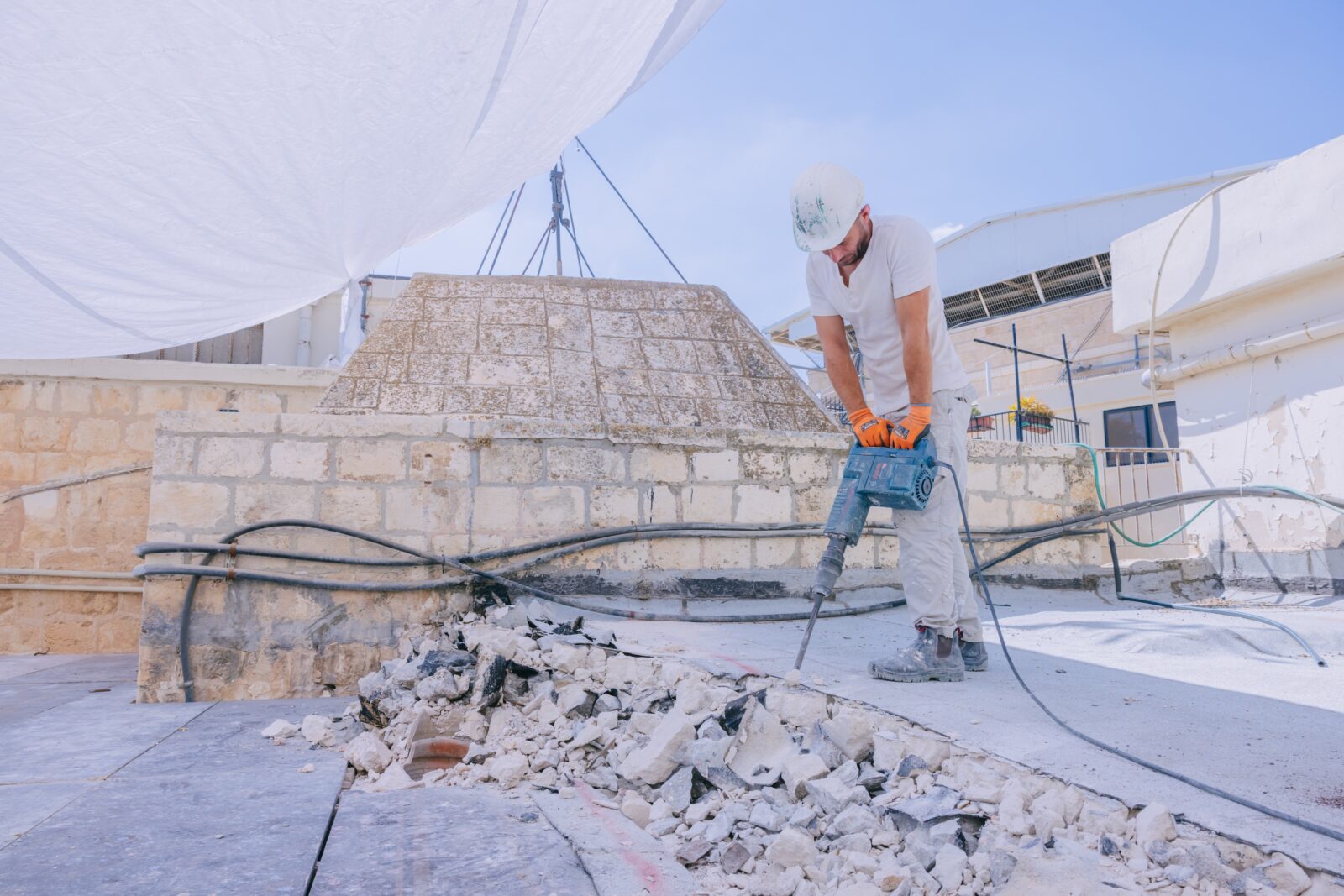
On 10 August 2026, representatives of Enabel, the Custody of the Holy Land, the supervision team and the contractor gathered at St. Saviour’s Monastery for a site visit marking the beginning of a new phase in the development of the future Terra Sancta Museum Art & History.
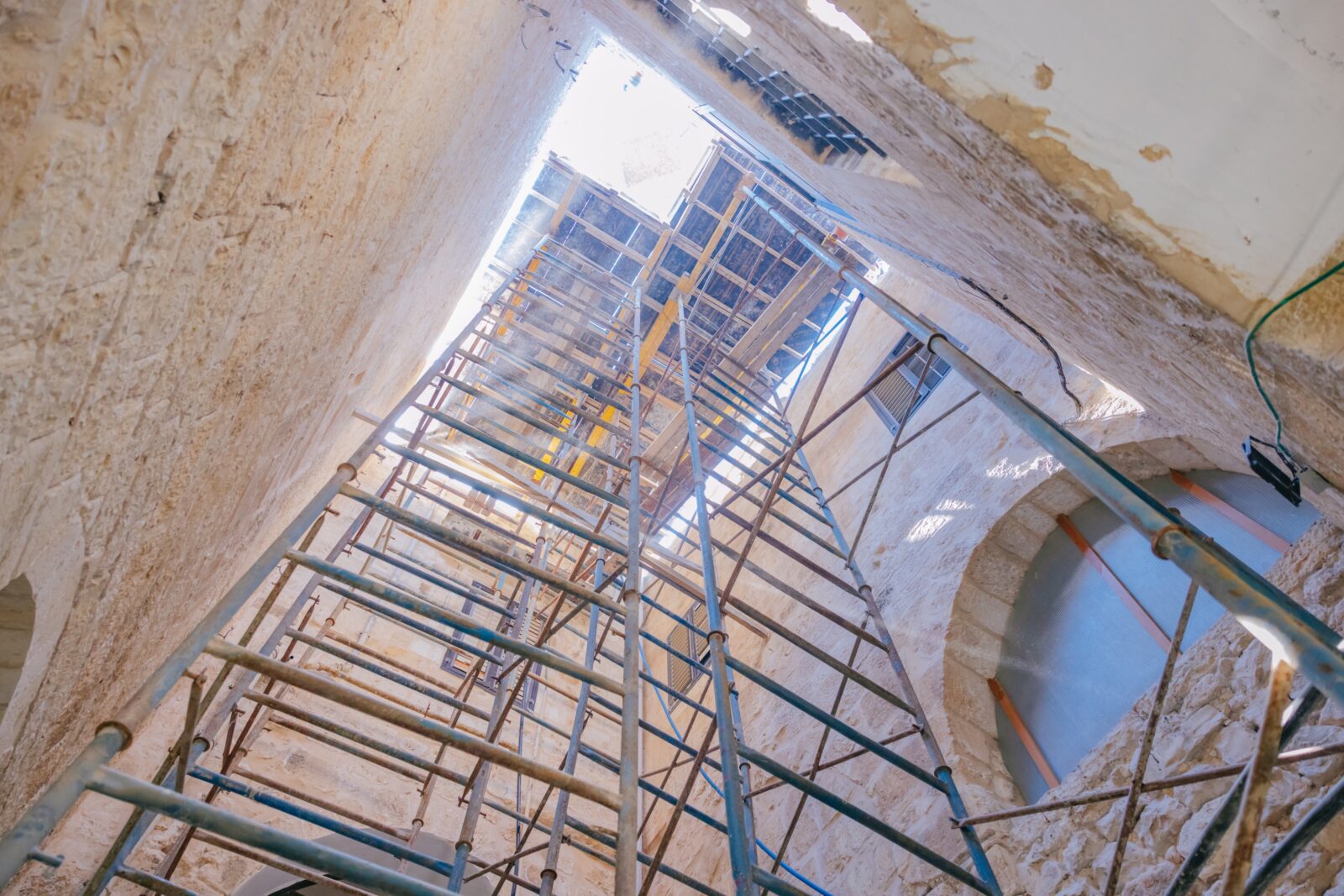
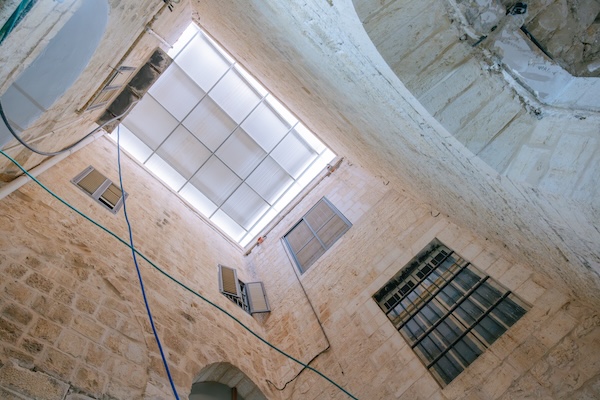
Following a public tender, the €150,000 project -financed by Belgian cooperation through Enabel Palestine- will support works aimed at improving the environmental conditions of the future museum. The intervention focuses in particular on the construction of a new skylight in Room 4, one of the historic spaces that will become part of the museum.
While the intervention may appear to be a specific architectural work, it addresses a fundamental requirement for the future museum: creating the conditions in which valuable collections can be preserved and displayed within the historic spaces of St. Saviour’s. The new skylight will help regulate the relationship between the museum spaces and the external environment, contributing to more stable internal climate conditions while supporting an environment suitable for both collections and visitors.
The project is therefore one of the many technical and conservation measures needed to transform the historic spaces of St. Saviour’s into a museum capable of safeguarding and presenting the Custody’s collections.
The project forms part of the long-standing cooperation between Belgium and Palestine, established in 1997. Through Enabel, Belgium supports education and skills development, strengthens local government and public services, promotes economic development, and contributes to the development of sustainable cities. Enabel also supports the economic regeneration of historic centres of local municipalities, placing the revitalisation of heritage within a broader vision of sustainable local development.
It is within this broader context that the future Terra Sancta Museum Art & History takes shape, in the historic St. Saviour’s Monastery in the heart of Jerusalem. The museum is part of a living heritage that reflects the history and cultural diversity of Palestine, and its opening will create a new point of access to this heritage for visitors, local communities, students and future generations. The support to the Terra Sancta Museum is therefore a concrete expression of Belgium’s commitment, through Enabel, to making heritage accessible and contributing to the cultural life of Palestine. By investing in the infrastructure needed to prepare the museum, the project helps create the conditions for this heritage to be shared, experienced and passed on.
For the Terra Sancta Museum, this partnership shows how international cooperation can contribute not only to safeguarding Jerusalem’s cultural heritage, but also to making Palestinian history and culture more accessible to the public. The €150,000 investment is supporting work that may remain largely invisible to future visitors, but will be essential to what they will eventually experience: collections preserved in appropriate conditions, historic spaces brought back to life, and a museum able to welcome local communities, pilgrims and visitors from around the world.
The Terra Sancta Museum is taking shape through these foundations. Partnerships such as this one demonstrate how investment in heritage infrastructure can help transform a historic building into a living museum – safeguarding the past while preparing it to be shared with future generations. Continued support from the European Union and countries such as Belgium will be essential to bringing this ambitious project to completion.