The Future Terra Sancta Museum Takes Shape: Heritage and Innovation
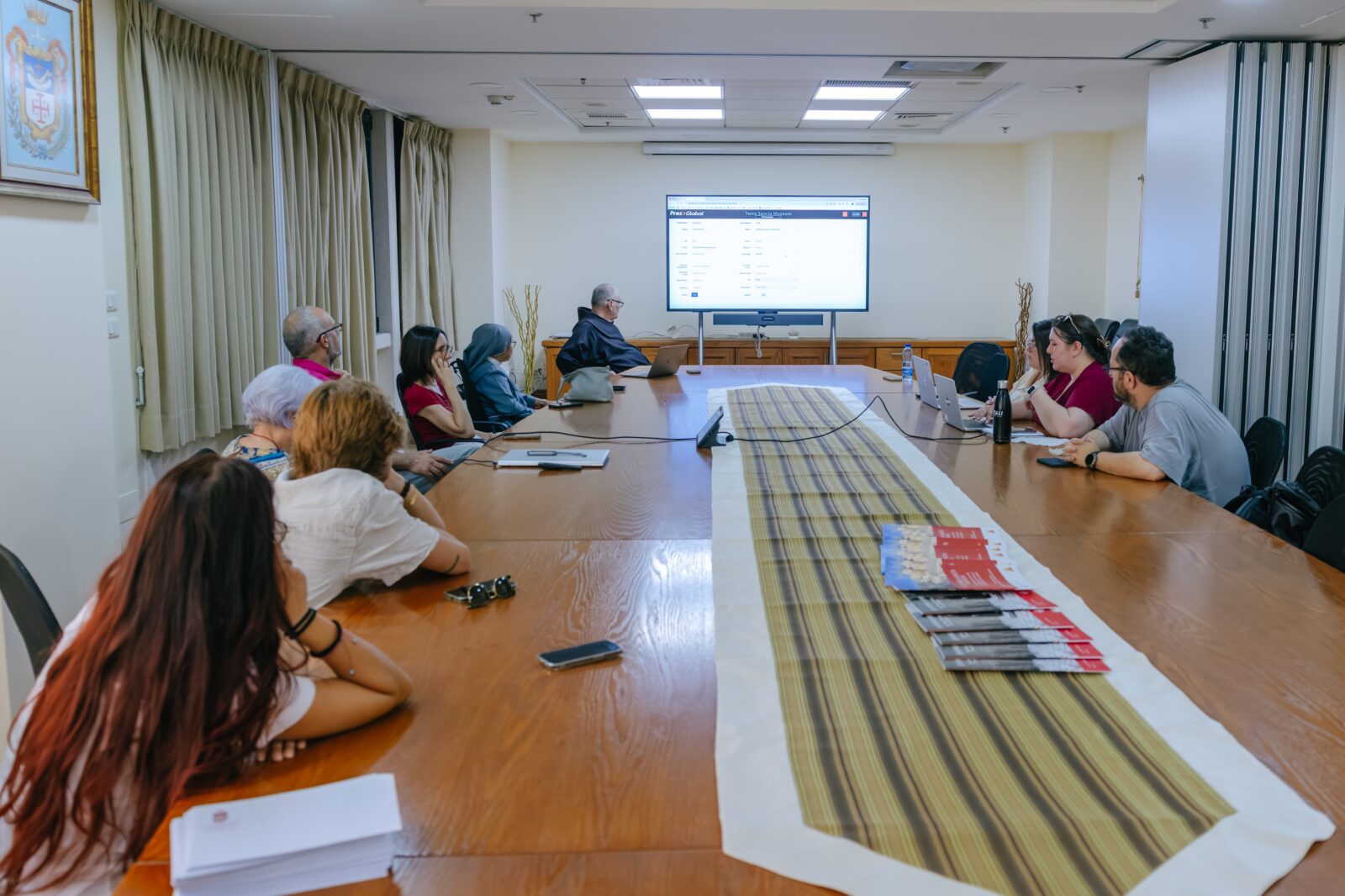
Meeting in Paris and online on 23 September, the Terra Sancta Museum Scientific Committee brought together around twenty members to review progress on the future Art & History Museum in Jerusalem. The day saw tangible advances in the areas of the building, conservation, security and research into the collections.
The first announcement came from Brother Stéphane, the driving force behind the project: the Archaeological Museum, the first institution in the Terra Sancta Museum network, has now been officially completed. Its inauguration is expected soon. As for the future Art & History Museum, architectural and exhibition design studies are entering their final phase, with the aim of submitting the Dossier de Consultation des Entreprises (DCE), a comprehensive set of administrative, technical and graphic documents required to launch the final tender and invite construction professionals to submit their proposals by mid-December 2026. The spaces intended for the museum’s future services — ticket office, toilets and cloakroom — have also been incorporated into the agency’s work. The consortium of experts has further expanded with the arrival of a firm specialising in security, represented by Stéphane Théfo.
The latest visit to Jerusalem by the project management team, in early September, confirmed that the project is progressing well, particularly the roofing works that began in August thanks to the support of the Belgian cooperation agency ENABEL. As a reminder, closing the three courtyards that remain open serves two complementary purposes: in the short term, to stabilise the future museum spaces and refine the technical studies relating to collection conservation; in the longer term, to define and secure the museum’s perimeter.
A Cross-disciplinary Approach to Security and Conservation
Closing the courtyards is therefore the first step towards securing the museum. As the spaces are currently closely intertwined with the public, semi-public and private areas of the monastery, controlling access remains a complex task. During his site visit, Stéphane Théfo, a former police commander and expert in religious heritage and the trafficking of cultural property, who has recently joined the team of experts at Perrot & Richard, identified several vulnerabilities and put forward initial recommendations. “What is striking is how many cross-cutting aspects there are to examine,” concluded Béatrix Saule, once again thanking Stéphane Théfo for joining the museum project.
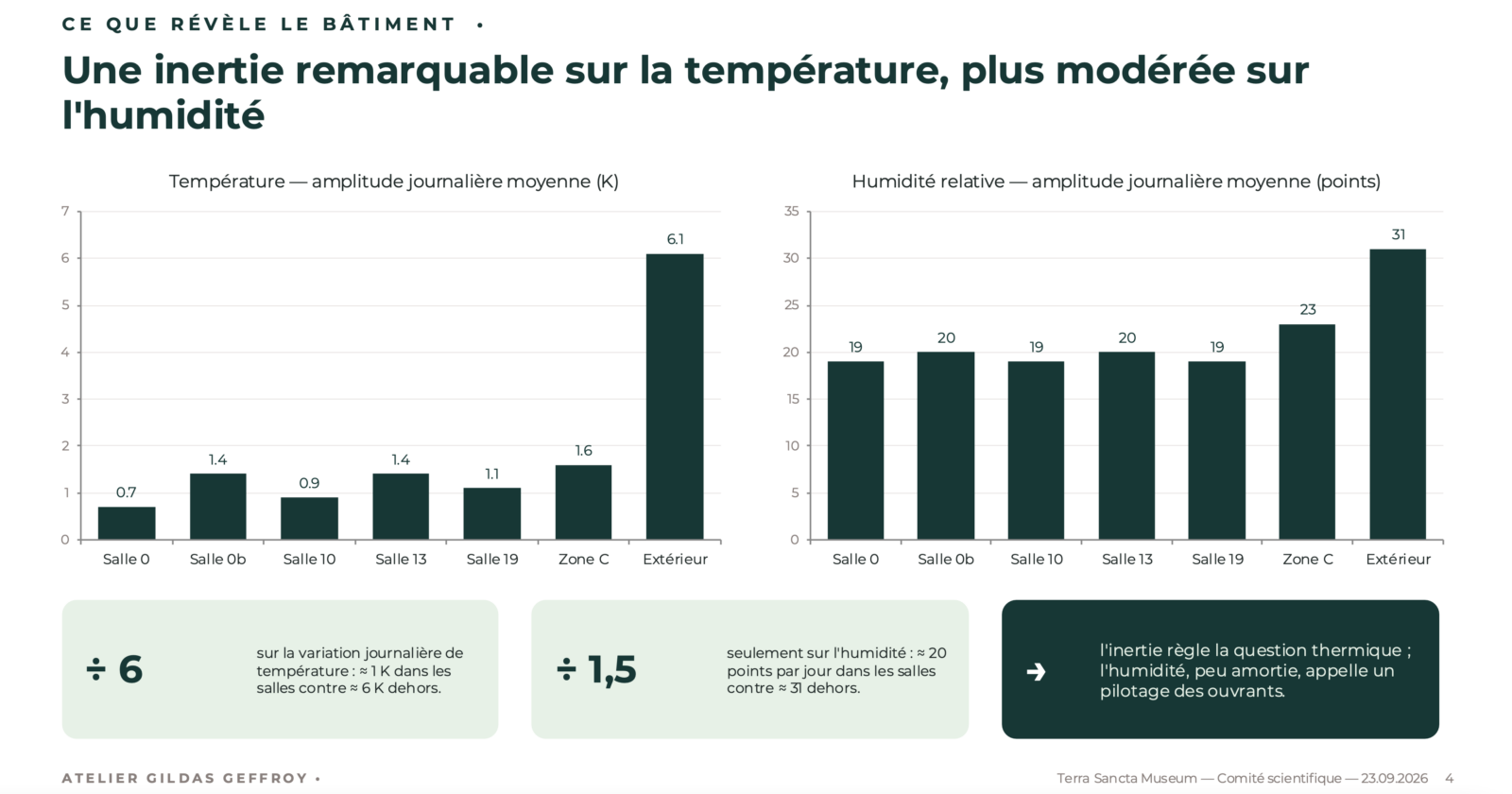
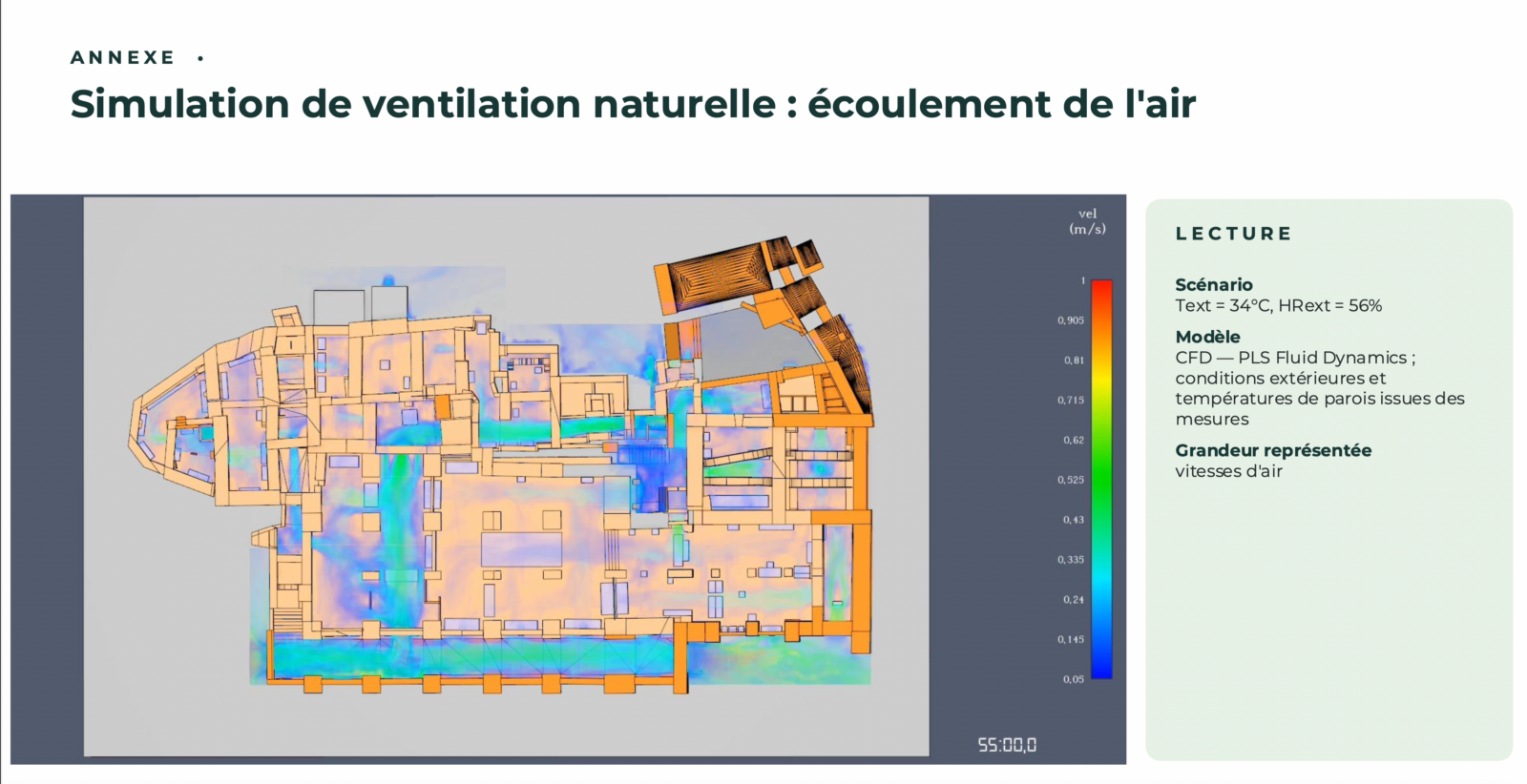
The ventilation of the museum spaces also featured prominently in the committee’s discussions, as demonstrated by Gildas Geffroy’s presentation of the ventilation studies. More than a year of measurements taken in Jerusalem confirms the buildings’ high thermal inertia: indoor temperature variations do not exceed 1.5°C, compared with approximately 6°C outdoors. The chosen approach therefore favours a low-tech, minimally invasive solution for the historic building: controlled natural ventilation, targeted dehumidification in rooms at risk, and natural smoke extraction, rather than a centralised air-treatment system. Ventilation openings controlled according to the dew point will help limit the risk of condensation; a specific protocol still needs to be developed to prevent mould and microorganisms. A new monitoring system will make it possible to track changes in climatic conditions. The same equipment may serve both ventilation and smoke-extraction functions. Fire and smoke-spread simulations are already being used to test the effectiveness of the proposed smoke-extraction system. The committee also acknowledged the contribution of Danilo Forléo, Head of Preventive Conservation at the Palace of Versailles, to this ongoing work. Discussions will now continue through weekly working sessions at the Perrot & Richard agency.
Exhibition Design and Interpretation at the Heart of the Future Visitor Experience
Matthieu Gillet also presented the planned interpretation of the pharmacy of Saint Saviour’s Monastery. Conceived as a genuine moment of “breathing space” along the visitor route, this section will offer an immersive exhibition experience, transporting visitors to another era. The studies draw in particular on a scan of all the pharmacy jars, making it possible to reconstruct their shapes, volumes and proportions. Thirteen types of vessels have already been identified, along with two main categories of furniture. The pharmacy room will also benefit from an in-kind contribution of expertise from Ateliers Perrault, whose experience in restoring and recreating large-scale heritage ensembles will be put to use. The committee was presented with initial wood samples for the furniture.
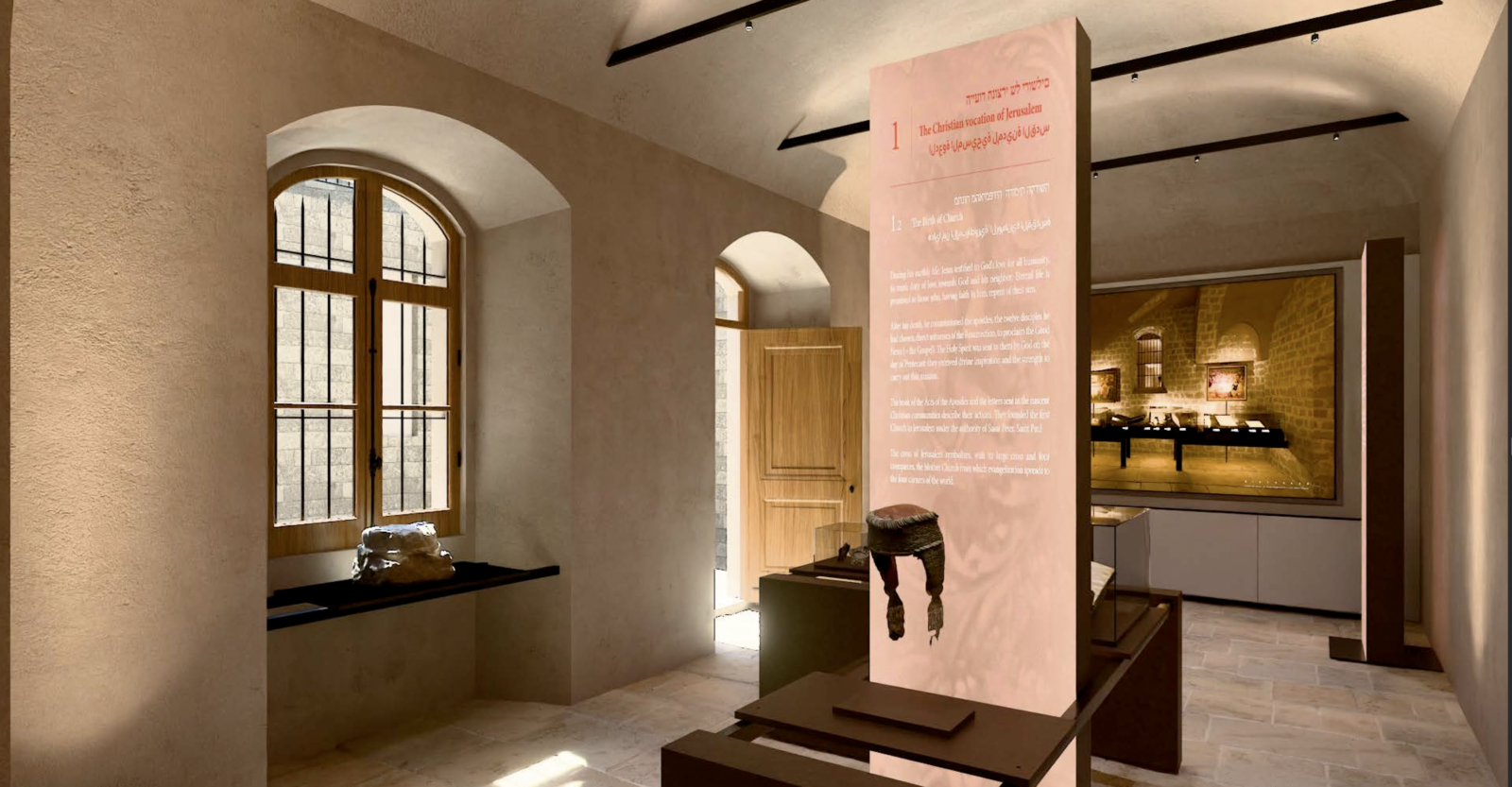
Finally, Frédéric and Thomas Beauclair, the project’s exhibition designers, unveiled the first images of the future educational and interpretation room. Conceived as a multipurpose space dedicated to education and access to culture, it will be able to host school groups, students, conferences and other audiences. Located midway along the visitor route but equipped with its own entrance, it will, above all, be able to open before the museum itself. The project includes audiovisual tools, multilingual materials and temporary exhibition facilities. Opening this space in advance will make it possible to develop the educational and interpretation activities already underway in Jerusalem, while offering the public a first glimpse of the future museum.
Collections, Restoration and New Tools in Support of the Museum
The afternoon was devoted to the collections. Several catalogues are in preparation, including one dedicated to The Treasury of the Church of the Nativity in Bethlehem, Its Organ and Medieval Music in the Crusader Period, led by Florian Meunier and David Catalunya. Research is also continuing on nineteenth- and twentieth-century goldsmiths’ work with Anne Dion; locally manufactured objects at the boundary between the secular and the religious with Charlotte Maury; and the mother-of-pearl collections with Rui Xavier. Among the discoveries is the Hogget of Dame Marguerite, an Ottoman document brought to attention by the new archivist, Brother Eduardo Masseo. Dating to 1335, it bears witness to the Franciscans’ definitive return to the Holy Land and their first legal possession at the Cenacle. Béatrix Saule presented its planned integration into the exhibition route.
Restoration work is ongoing, particularly on the painting depicting the ecstasy of Saint Francis of Assisi and on portraits of prominent royal donors. Thirteen documents will also be reproduced as facsimiles, including three papal bulls, three hoggets and three drawings, thanks to funding from the Italian cooperation agency AICS. Baudouin Duchange, responsible for the museum’s digital projects, announced the implementation of online ticketing, first for the Archaeological Museum and, eventually, for the Art & History Museum as well. He also announced the selection of a provider to redesign the museum website, with the new version scheduled for early 2027.
In conclusion, Brother Stéphane announced that three young Arabic-speaking professionals would be joining the communications and collections management teams. This additional support reflects the growing local roots of a project that has now entered a decisive phase of its development.