Denise Marie Scalzo: “Promoting a Culture of Peaceful Encounter Between Palestinians and Israelis”
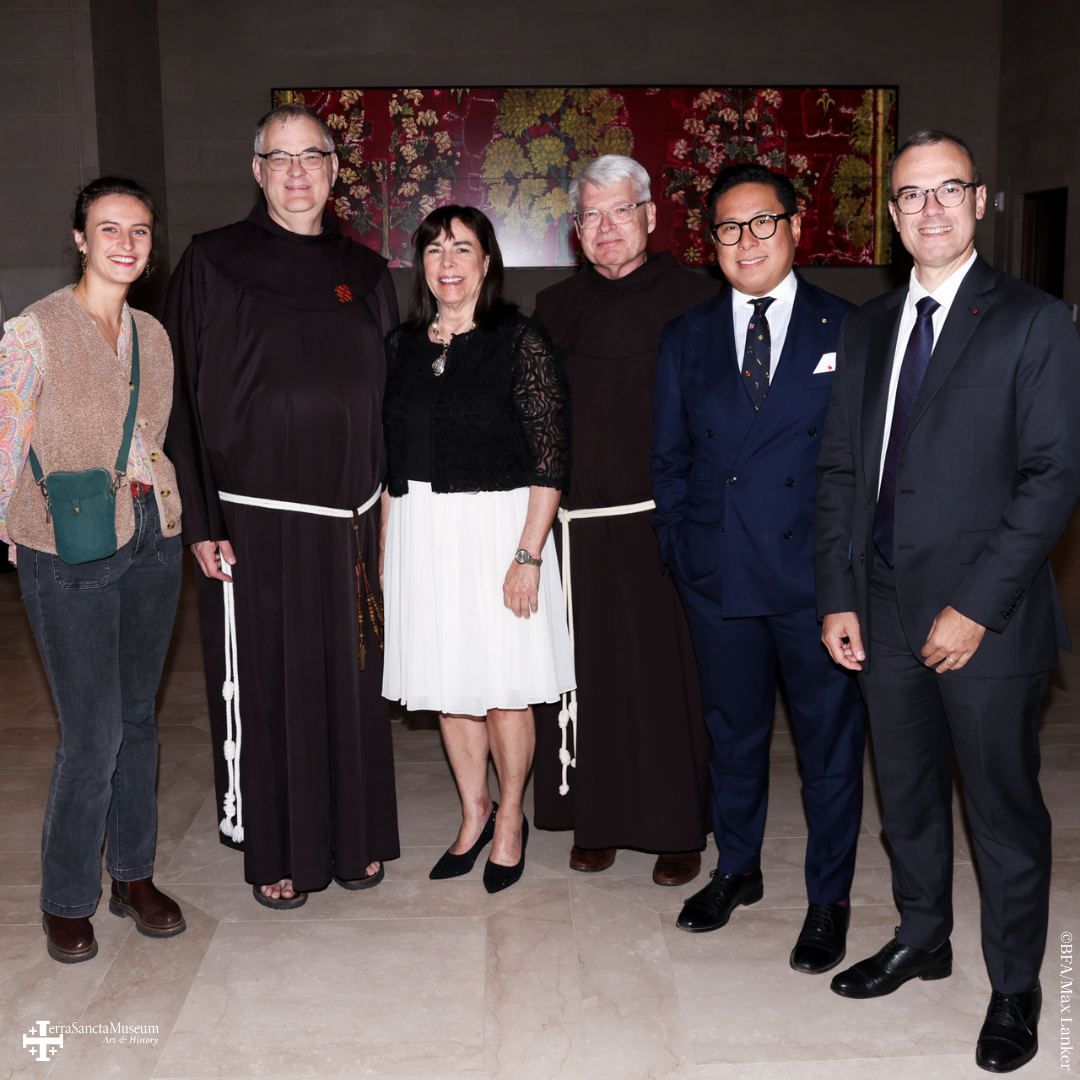
International exhibitions always give us the opportunity to meet inspiring people. In this interview, Denise Marie Scalzo, a founding member of the Franciscan Foundation for the Holy Land (based in San Diego, California), looks back on her long relationship with the Holy Land. . A lay Franciscan, advisor for the Holy Land, and member of the Western Lieutenancy of the Equestrian Order of the Holy Sepulchre of Jerusalem, Denise Marie Scalzo offers us an American perspective on the museum project and the current exhibition at the Frick Collection.
How did your romance with the Holy Land begin?
It all started in 1992, shortly after the Gulf War. Guided by my spiritual director, a Franciscan friar, I discovered the Holy Land for the first time. That first trip was decisive, I wanted to understand the history of my Catholic faith.
You are one of the founders of the Franciscan Foundation for the Holy Land in the United States. What are its areas of action?
Created to respond to the growing challenges faced by Christians in the Holy Land, the Franciscan Foundation for the Holy Land has the primary mission of supporting and preserving this community by offering concrete resources to help them remain in their land of origin. Through a humanitarian approach, the foundation works to ensure that families can not only survive, but also thrive.
The programs supported include university scholarships, assistance for primary and secondary education, professional and technical training, the Magnificat music program, as well as housing projects.
How did you discover the Terra Sancta Museum project?
While working on the renovation project of the Holy Sepulchre, I met Brother Stéphane Milovitch. He showed me some precious objects from the Treasury of the Holy Sepulchre. I was immediately captivated by the exceptional quality of the pieces and the significance of the project. When I learned that an exhibition would be held in the United States, in collaboration with the chief curator of the Frick Collection, Xavier Salomon, I wanted to support this initiative.
As an American committed to serving the Christians of the Holy Land, what do you think of this cultural project in Jerusalem?
Establishing the museum in the heart of the Old City, at Saint Saviour’s Monastery, is highly symbolic. It embodies a commitment to promoting a culture of peaceful encounter between Palestinians and Israelis. This cultural project also reflects the desire to deepen understanding of the Christian history of the region while highlighting the Western Christian presence in the Holy Land.
This museum will be a space of learning open to all, especially younger generations, schoolchildren, and university students, through educational, recreational, and awareness-raising activities.
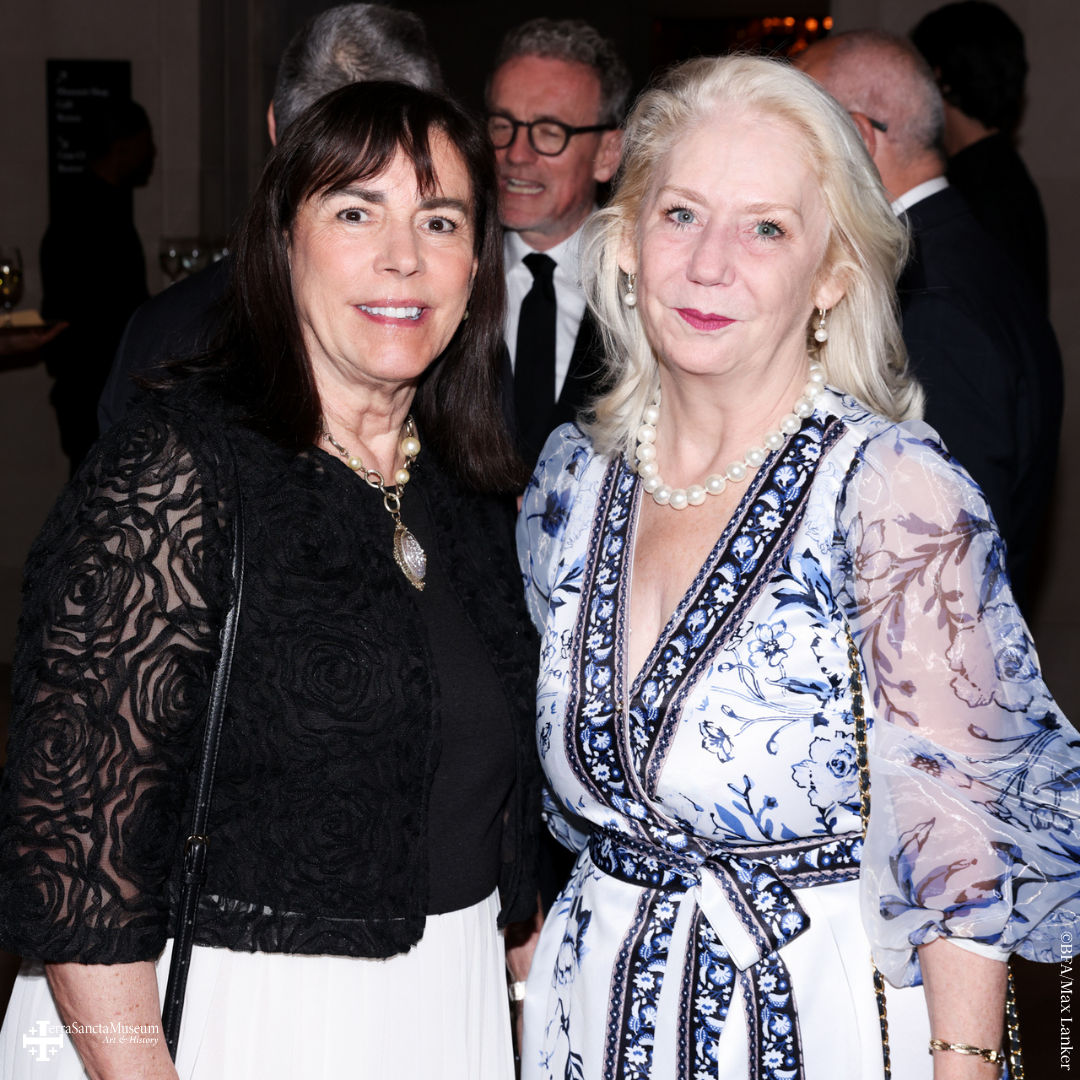
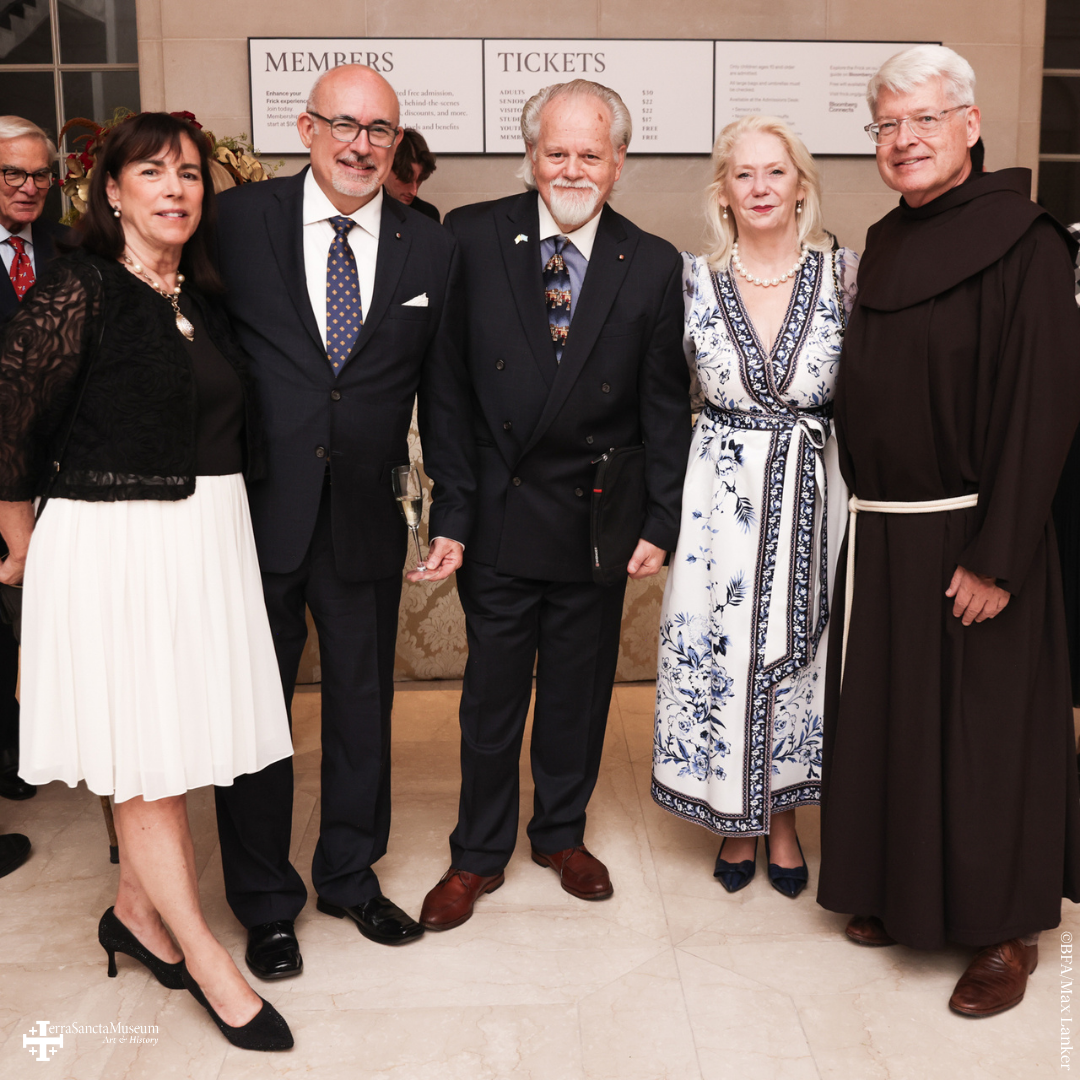
The exhibition presented at the Frick Collection, and soon at the Kimbell Art Museum (Ft. Worth, TX), plays an important role in showcasing the Terra Sancta Museum’s collections. But how can it strengthen or awaken a connection to the Holy Places?
The exhibition at the Frick Collection in New York, and soon in Fort Worth, has generated great interest. It is a remarkable educational tool for better understanding our Christian heritage. Visitors are often amazed by the beauty of the objects and the stories they tell. Lectures given by Brother Stéphane and Xavier Salomon further enrich the experience. The enthusiasm is such that many visitors recommend the exhibition to others.
Through word-of-mouth and media coverage, the exhibition is gaining visibility beyond American borders. It attracts the interest of many circles: friends, pilgrims, patrons. This project offers a unique opportunity to rekindle attachment to the Holy Places, strengthen spiritual and cultural ties between peoples, and raise public awareness about the need to preserve this shared heritage.