Dreaming Musical Pilgrimages: Genealogy of the Oldest Organ in the Christian World
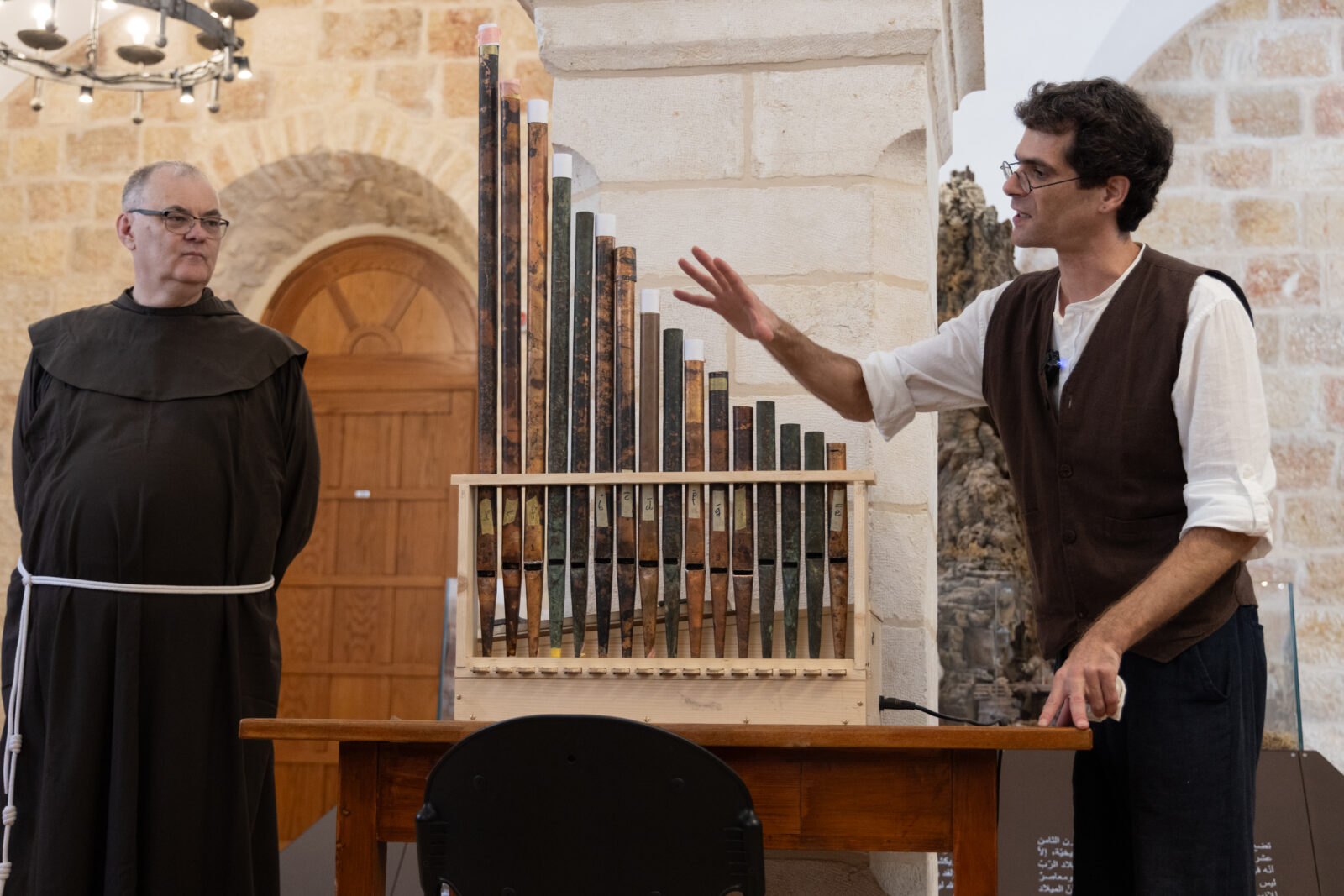
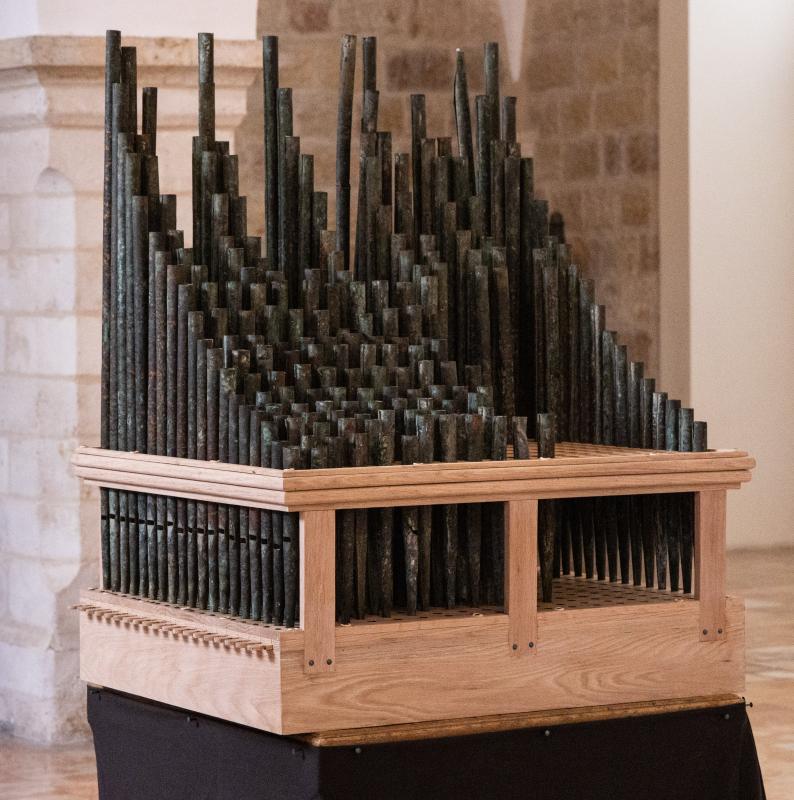
Among the most relevant material testimonies for the study of medieval music are the oldest surviving organ pipes of the Christian world. Discovered by the Franciscans at the end of the nineteenth century in the Church of the Nativity, their historical significance was brought to the attention of the wider public thanks to the work of the musicologist David Catalunya. After training between Barcelona, Germany, and the University of Oxford, he launched a rigorous research project of great cultural impact.
Scientific Advances of the Last Year
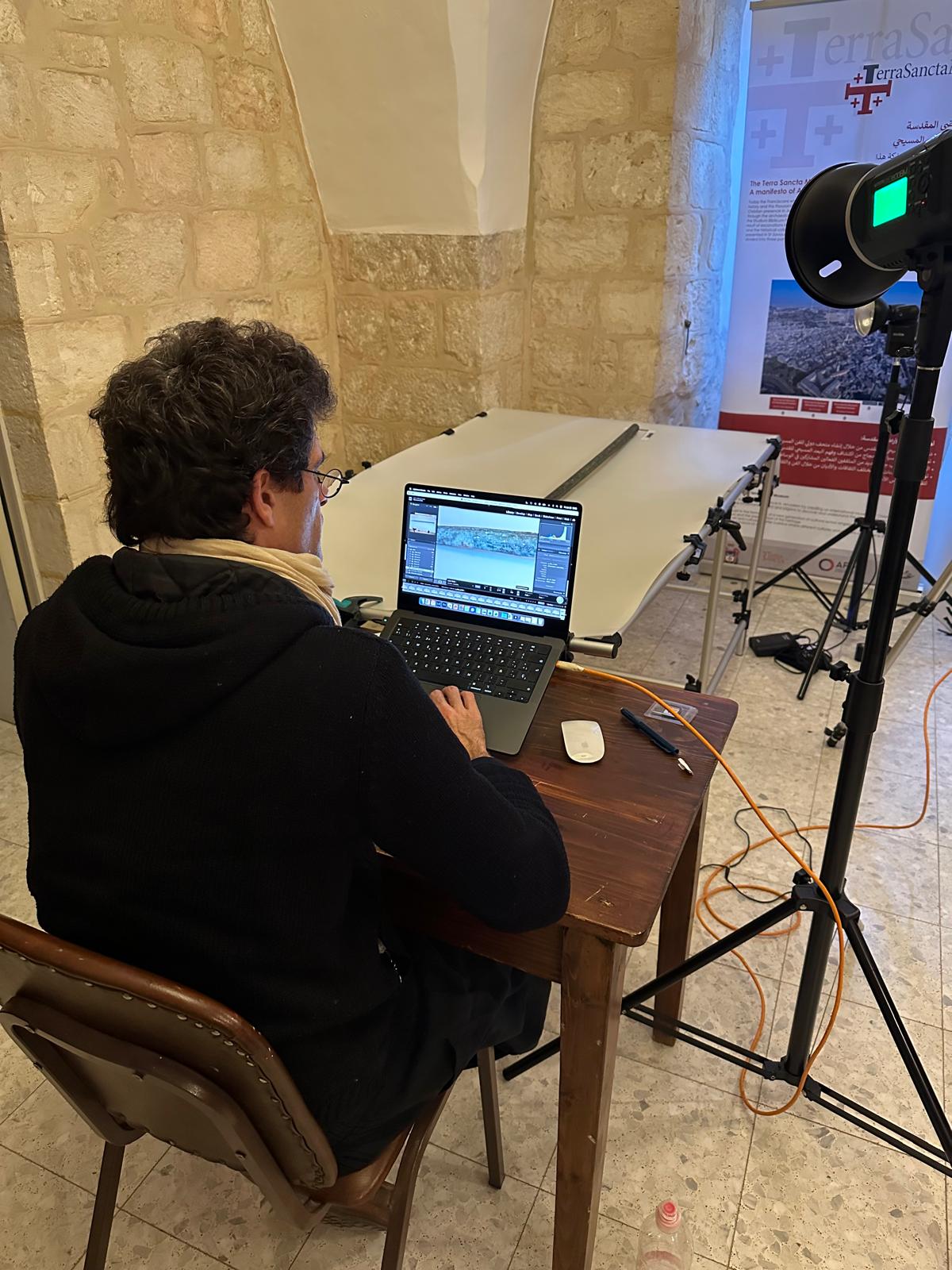
“The project began in 2020. After completing a full inventory of the pipes, with more than 5,000 measurements, over the last year we have launched a second phase based on deeper scientific analyses of the materials. Originally, the instrument consisted of 342 pipes (222 are preserved today). The project took on an entirely new dimension in May 2025, when it was discovered that eight original pipes still fully retain their sound-producing capacity. This finding marked a fundamental turning point, since the initial goal was to reconstruct the sound through experimental copies, whereas it is now possible to listen directly to the sound of the original pipes and compare it with that of the replicas, both from a material and an acoustic point of view. This makes the instrument the oldest in Europe to preserve part of its original sound—an extraordinary fact,” explains Catalunya, “as if these pipes were a time capsule.”
The discovery was made possible thanks to a methodology that combines archaeological research and practical experimentation, always respecting the principle of non-intervention and non-restoration of the original pipes.
Today, the project not only aims to reconstruct a lost historical instrument, but has become an exceptional window onto the cultural, technological, and intellectual universe of the Middle Ages. Its character is absolutely unique: the next surviving organ pipes in Europe date back to the fifteenth century, opening a historical window of several centuries onto a period for which no comparable material remains exist. Moreover, this instrument resembles no later one, as the organ underwent significant evolution over the following four hundred years. Thanks to this discovery, it is now possible to reinterpret medieval texts and iconographies that until now could not be fully understood.
On the Sonic Recreation of the Organ in the Museum Space
The importance of Catalunya’s study aligns perfectly with the museum’s vision.
“The collaboration with the museum is very close and based on a relationship of mutual trust. From the moment I arrived in Jerusalem in 2020, a deep connection was established, especially with Friar Stefan, who immediately understood the scientific and cultural importance of this work. My interest is not limited solely to the archaeological remains, but also extends to the museum project as a whole, and I consider it essential to contribute to presenting this heritage to the public in the best possible way.”
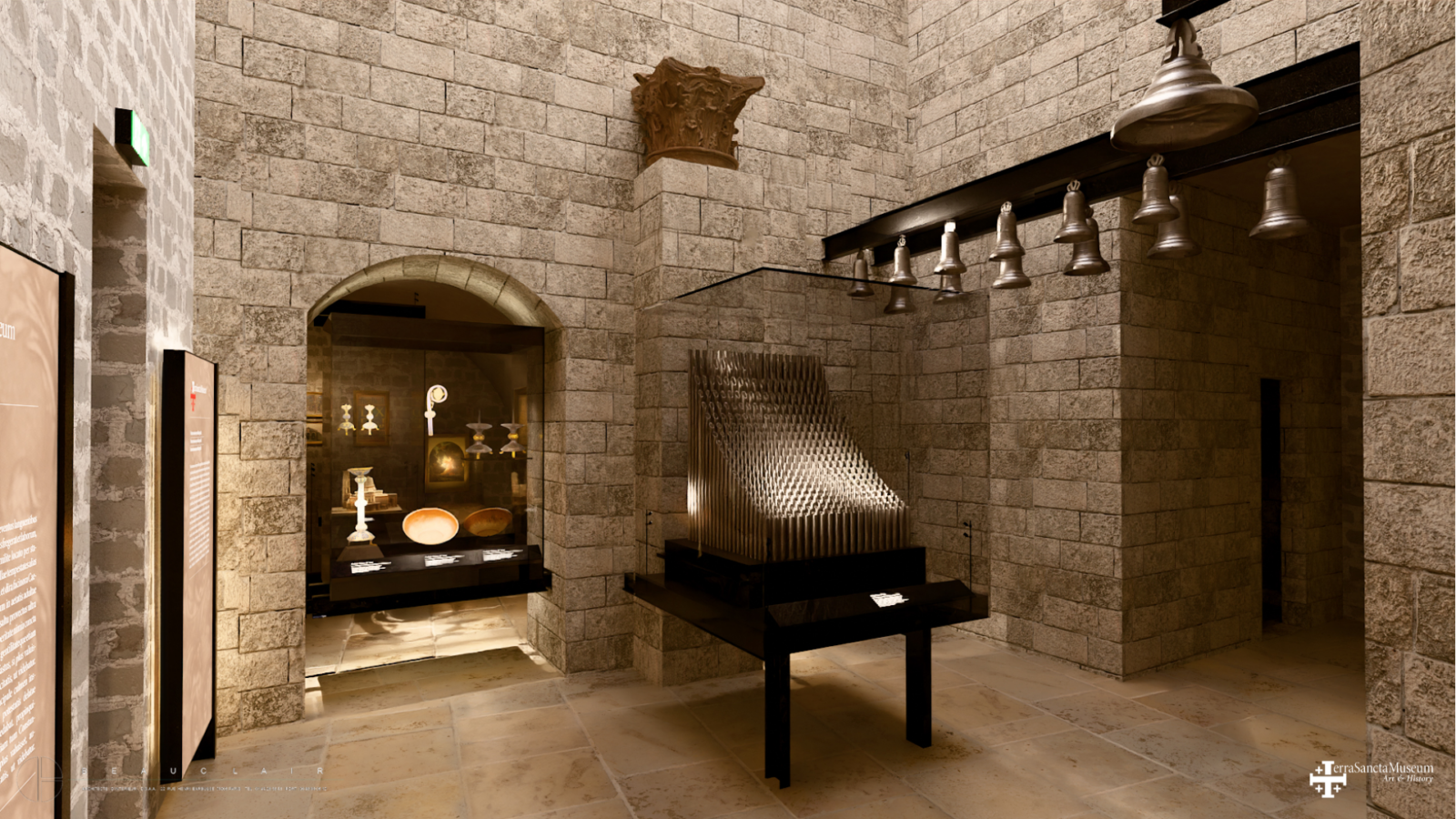
Catalunya continues: “The ultimate goal of the project is for the sound of the instrument to be heard in the museum. To achieve this, a thorough study is essential in order to understand the instrument, reproduce it, and make it sound in all its fullness.” At the same time, an auralization is being developed—that is, a digital acoustic model of the Church of the Nativity, together with the bells—which will make it possible to integrate the sound of the reconstructed instrument into its original space and recreate its historical sonority.
“This is a complex and fascinating research process. Although we already know the sound of some original pipes individually, we still do not know how the instrument sounded as a whole. Each note of the organ originally activated eighteen pipes simultaneously, a sound that has never been heard in the modern era and that belongs to a completely different sonic universe. The only way to access this experience is to reconstruct the complete instrument and make it sound in its entirety.
This project has enormous educational and outreach potential. Both schools and museum visitors will be able to experience the impact of a historical sound directly. The intention is that, through the organ and also the bells, Jerusalem may become a place of pilgrimage not only spiritual, but also musical. The fact that the oldest organ of Christianity is preserved here, together with the oldest musical sound in Europe, makes this instrument a true living relic.”
From a museological point of view, the project envisages the exhibition of the original instrument alongside a reconstructed replica, as well as the possibility of listening both to the sound of the original pipes and to that of the complete reconstruction, allowing the organ to be understood in its full sonic dimension.
Finally, the project also includes the study of the bells, which constitute another exceptional discovery: the only preserved medieval carillon of eleven tuned bells. One of the most fascinating aspects will be to analyse the sonic relationship between the organ and the bells, since both were buried together and are frequently depicted playing simultaneously in medieval miniatures.