One body, many images: Art as a language of Christian unity
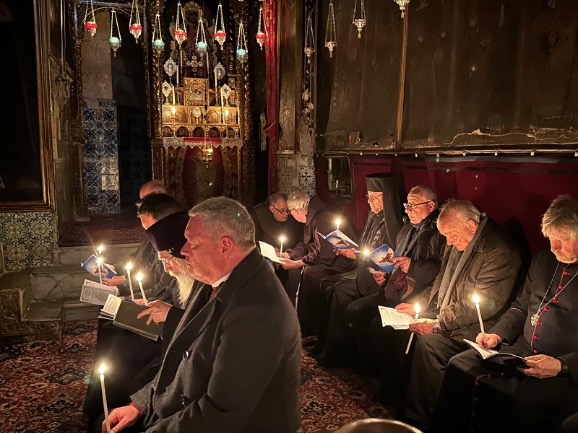
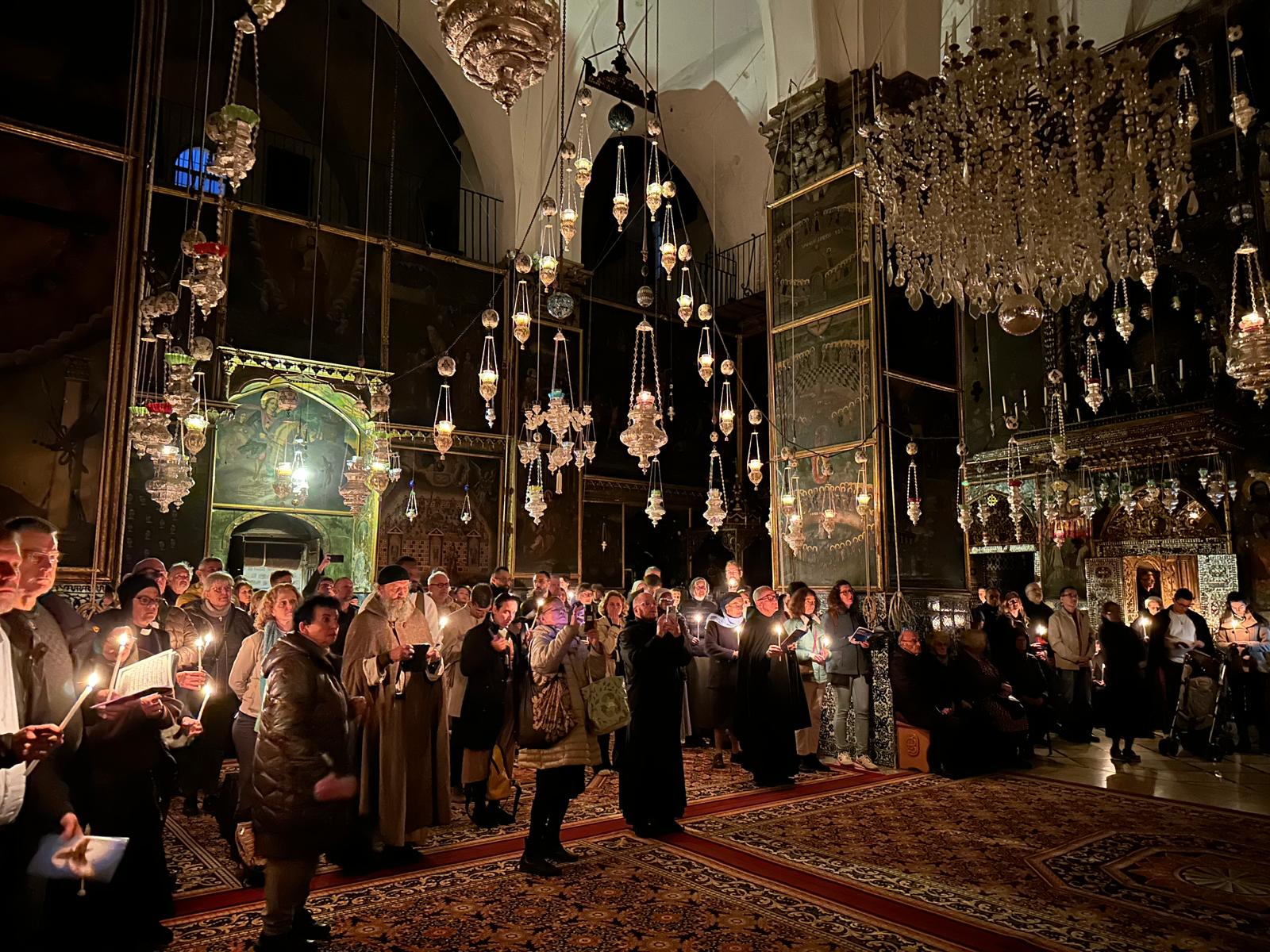
In Jerusalem, a crossroads of peoples, languages, and Christian traditions, unity in the church is lived out in plurality and in everyday encounters. Inspired by the Week of Prayer for Christian Unity -started in 1908 as a global ecumenical event with themes changing every year-which has this year’s theme “There is one body and one Spirit, just as you were called to the one hope”, we offer you to reflect on art as a shared language. From Jerusalem, we went to meet artists and art experts from different Christian communities.
For several years now, the Terra Sancta Museum Art&History has enjoyed meeting and collaborating with other Christian cultural actors with exciting journeys. Christian communities are becoming increasingly aware of their heritage, as historian Vincent Lemire explained in an article published on our website.
The proof of that is inthe recent opening of two other Christian museums in the Old City: the first one is the Mardigian Armenian Museum. Situated in the Armenian quarter, it opened its doors in 2022 after almost a decade of renovation as the first Christian Museum of a local community. The Chairman of the Board of Directors of Terra Sancta Museum Brother Stéphane was happily present in that important occasion, thus strengthening the long-standing relations between the Custody and the Armenian Orthodox Patriarchate. Later on it was the turn of the Greek Orthodox Museum, whose opening was in November 2025. It is in this context that the Terra Sancta Museum Art & History paves its way, aiming at being a crossroads and a meeting point for the rich local communities and the world. These collaborations are an important sign of mutual esteem and cooperation among Christian cultural institutions, and they also encourage the Terra Sancta Museum to engage in dialogue with other museums.
Art gets us closer to God
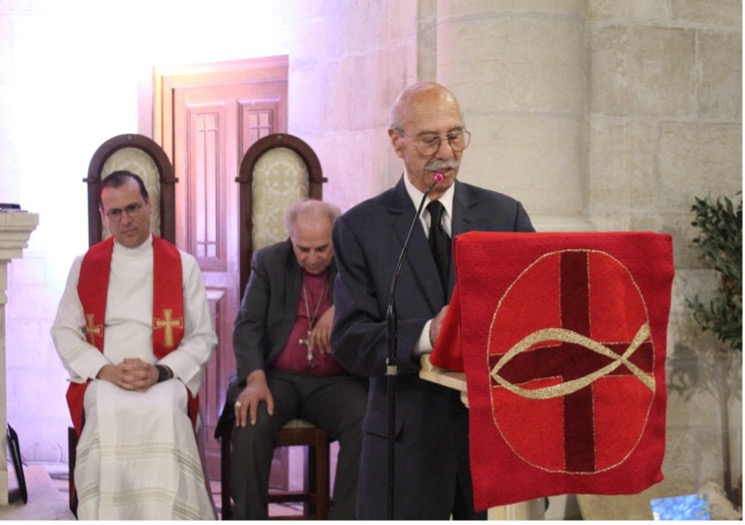
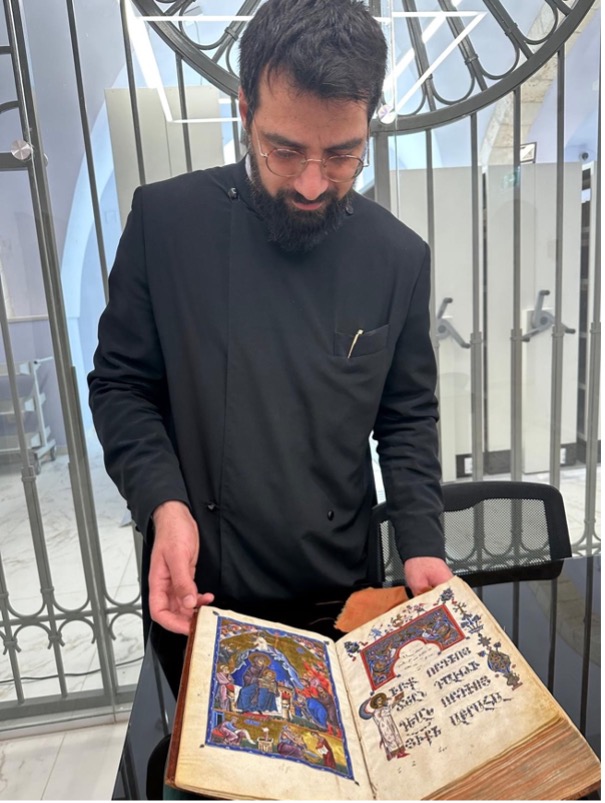
Across different Christian traditions, art offers diverse paths toward God shaped by distinct ecclesial origins. Yet within this plurality, a shared journey emerges. Father Arshak Ghazaryan, Dragoman of the Armenian Orthodox Church, has always nurtured a deep passion for art, especially for Armenian miniatures. When he entered the seminary, he discovered his vocation by studying art and cultural heritage conservation. Today, he sees art as a bridge that enables dialogue between cultures and peoples.
A Palestinian artist based in Bethlehem, Adel Nasser discovered his vocation early and has spent the past twenty-five years creating liturgical vestments and altar furnishings for the Evangelical Lutheran Church. “My inspiration always comes from biblical verses. I always return to them,” he explains, whether working with calligraphy or textile design.
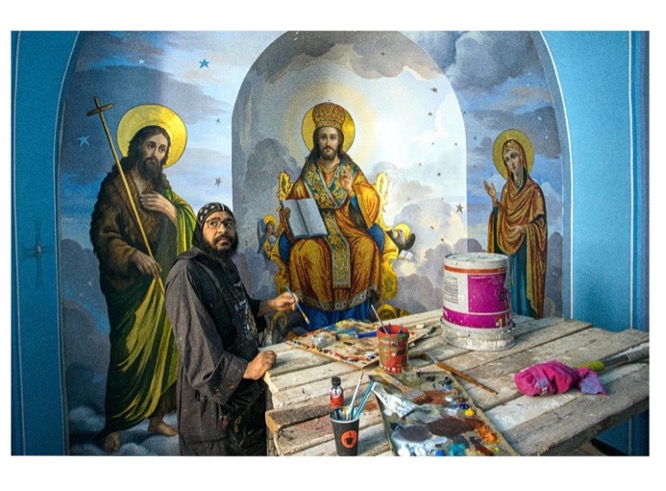
For others, this language is iconographic. After exploring other paths, Theophilus Al-Orshlemy from Egypt gradually realized that art was his true calling, eventually becoming an iconographer and restorer for the Coptic Orthodox Church of Egypt and now of Jerusalem. “Art is a story. Icons tell stories,” he says, explaining how icons engage the whole person: “My eyes move because the icon is telling me a story… When all the senses are involved, the space becomes oriented toward God rather than distraction.”
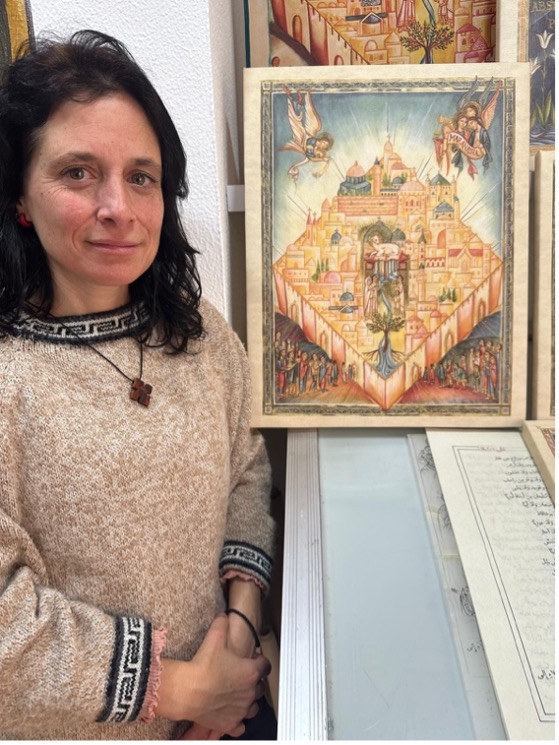
María Ruiz, iconographer of the Latin Patriarchate, came to iconography as a spiritual journey that gradually became her vocation. “I approached iconography 23 years ago, in a search for a form of prayer that could unify all the levels of my person. Every time I take up the brush, my dialogue with Jesus begins.” Reflecting on sacred art, she adds: “ Art and icons are, matter; therefore, they are not a denial of the goodness of creation or of the goodness of bodies. On the contrary, they are a divinization, a synergy between the divine and the human”.
What emerges from these different practices is not competition, but complementarity. In this sense, art precedes dialogue-it prepares the space in which dialogue becomes possible.
One hope
Our Art experts were asked to share their hope, recalling the title of this year’s Week of Prayer for Christian Unity “There is one body and one Spirit, just as you were called to the one hope”. It was mesmerising seeing their answers, coming from different backgrounds and yet seeing how a part from the doctrine, they were all centered to Christ.
“What divides us belongs to human fragility, not to Christ: in Him we are already one, across our different denominations. A Christ-centred vision of faith helps us recognize that unity already exists and must be lived. And since Art creates a safe space of encounter, beyond debate, where beauty disarms us and opens the heart, the dialogue is more natural”,stated María. This understanding of art as a unifying force resonates with the reflection of Father Arshak who recalls how, across decades marked by conflict and division, art has often been the element that endured. “along History, Art is the only thing that can survive. It is a tool to get to know the other. f we acknowledge the power of art and try to find similarities among all of us instead of focusing on differences, hope will become more visible through art -not only in exhibitions, but also in our everyday live”. Adel echoed María,saying he is convinced all Christians will be united with the coming of Christ at the end of times.
Abuna Theophilus used a very warm metaphor: that of family. “We are all brothers and sisters: like in a real family, we may wear different clothes and speak in different ways, but that does not mean we are not siblings”. And then he reaffirms – referring to his hope for Christian Unity: “I do not wish for anything more than what Jesus Christ Himself wished for: ‘that all may be one.’ Differences do not mean that we are not siblings.”
This goes along with what Brother Stéphane told us in our latest article: “Ecumenism requires this humility: to rejoice in what is truly found, not in what one expects to find”.Therefore unity is the ability to recognize one another as part of the same body. As in a family, differences do not negate belonging. In a fragmented world, art continues to remind us that unity does not need to be invented, but rather recognized and safeguarded, “that all may be one.”