Restoring through Love: a journey between France, Italy, and the Holy Land
How did your journey in restoration begin?
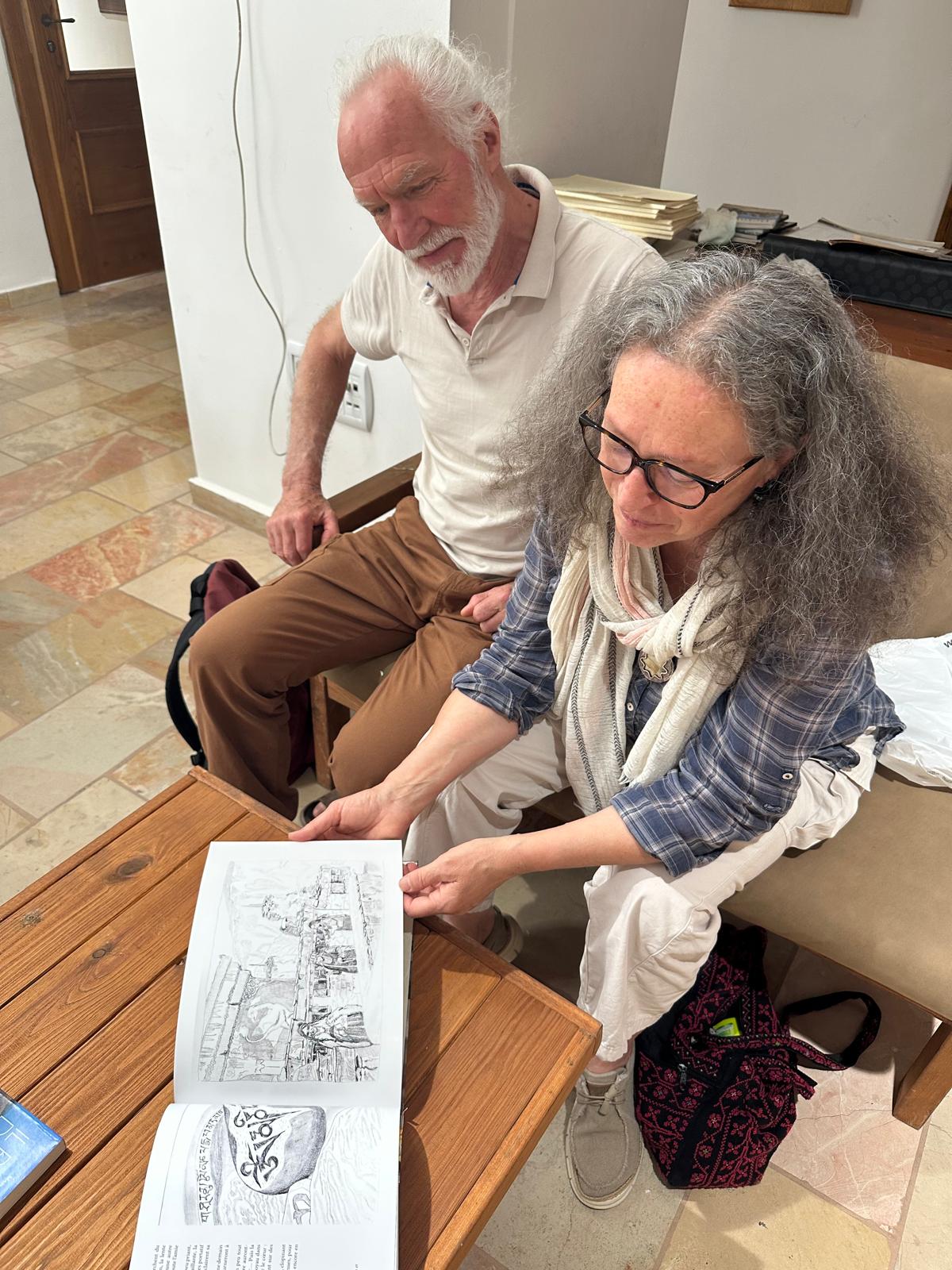
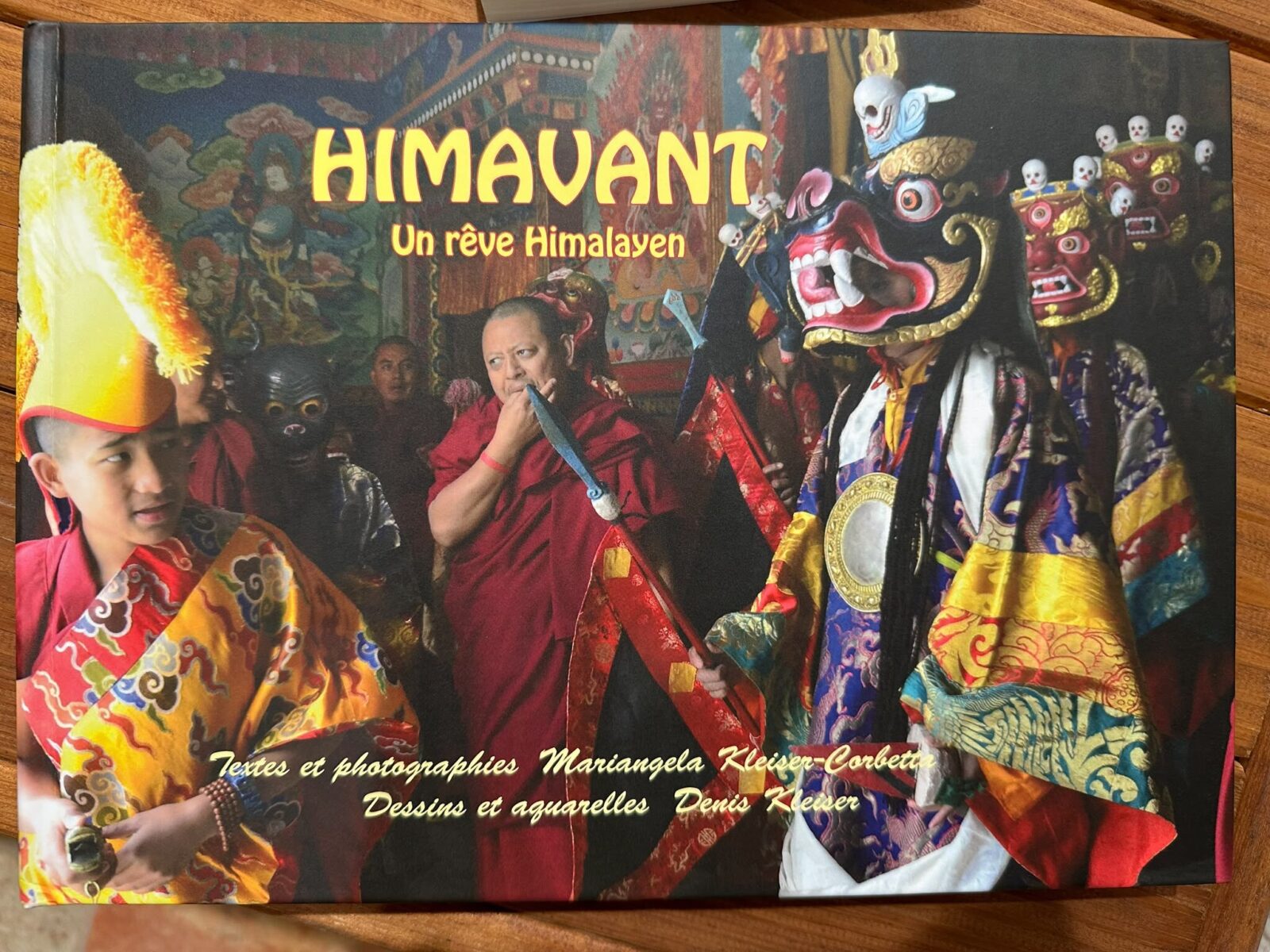
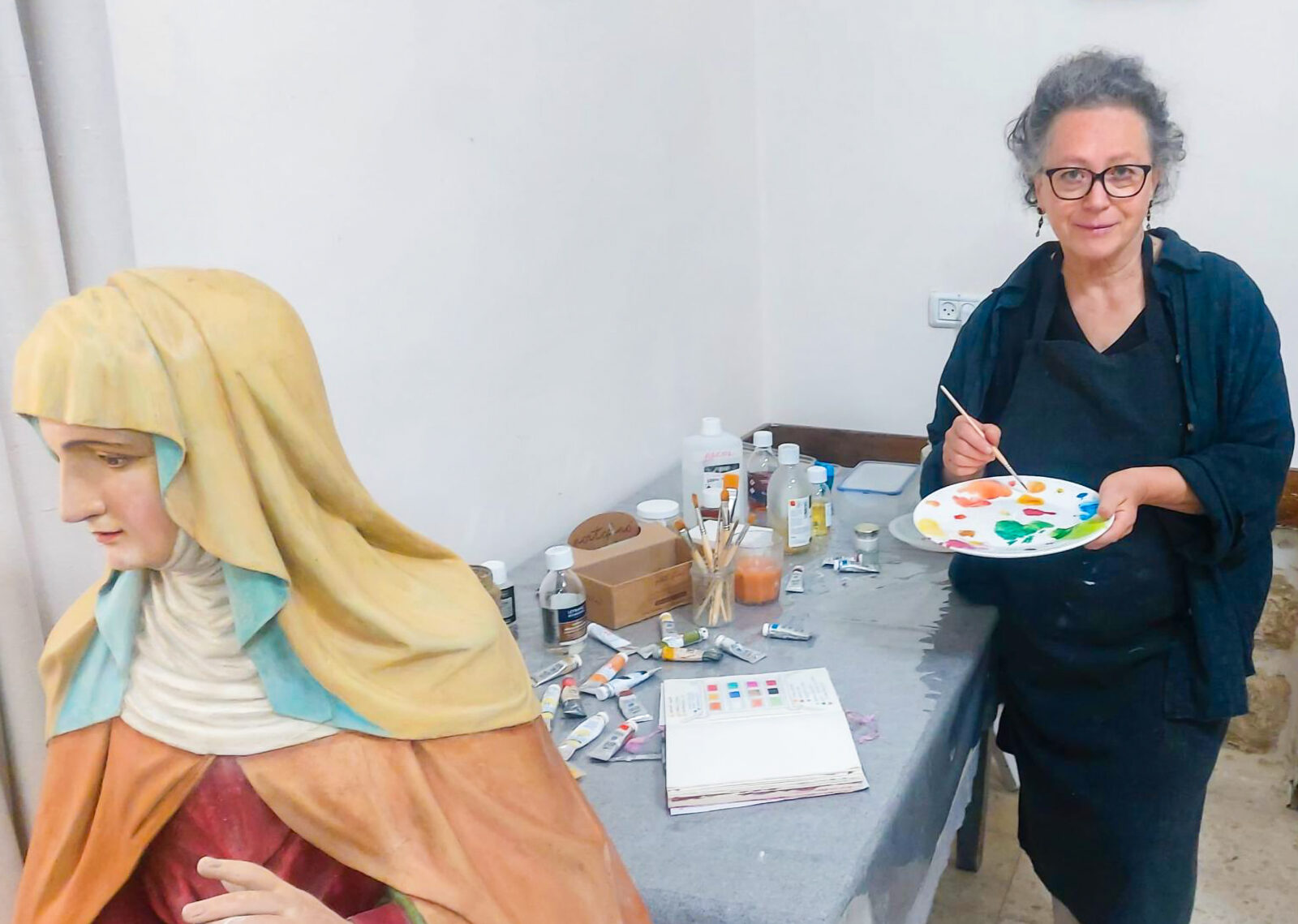
My husband, Denis Kleiser, was not a restorer like me, but a manual arts teacher and a talented draftsman and watercolor painter. Despite our different backgrounds, he is able to help me throughout the restoration process.
We met in Alsace after I completed restoration school in Italy, and we have never been apart since. After some early experiences in restoration, my professional life took a turn in 1989: I began working in Waldorf education and studying ethnology, art, photography, and documentary filmmaking.
I traveled to various places, including Morocco, conducting ethnographic research, and I somewhat set aside the art of restoration. As the Italian saying goes: “Learn an art and set it aside.”
I often wondered why I could not simply be satisfied with my initial training as a restorer and instead kept throwing myself into new studies and experiences.
There was a kind of inspiration, an inner drive: an attempt to repair, to care first for art and then for children through education. It probably stems from the unconscious dimension of my childhood; there is an intimate dimension that goes beyond chronos, the ordinary time of life. Perhaps everything begins there: the desire to protect, to listen, and to bear witness to something that remains, in its essence, indecipherable.
This is also what connects me to ethnology: going toward others, learning, listening, and trying to understand different ways of inhabiting the world, especially those of indigenous peoples who are gradually disappearing.
How did you end up in the Holy Land as restorers?
To try to answer you, looking back at the improbable and mysterious trajectories -both celestial and earthly- that led us here, I would say: for love.
Yes, for love we followed in the footsteps of our daughter, who has now been living here for years. No one could have imagined that one day part of our life would unfold in Israel. For us, it had once been an utterly unthinkable travel destination.
And yet it was precisely there, on that small strip of land torn apart by countless wars, including holy wars, that destiny, life -which is always more imaginative than we are- or perhaps the hand of God, that mysterious hand capable of drawing straight lines through curves, brought us. Returning to Israel year after year, we began to understand the complex reality of a country we previously knew nothing about, and the people who live there. At the same time, we ourselves underwent slow transformations that eventually led us to say: “Perhaps we can help, make ourselves useful in one way or another.”
Father Louis-Marie Coudray first directed us to the Custody, where Father Stéphane urgently needed restoration work for the Holy Sepulchre. We met in January 2023 and, after a four-month journey through India, returned to Jerusalem for our first volunteer experience in April of that same year. Then we returned again between September and October 2023.
First time in Ein Karem: what are you restoring?
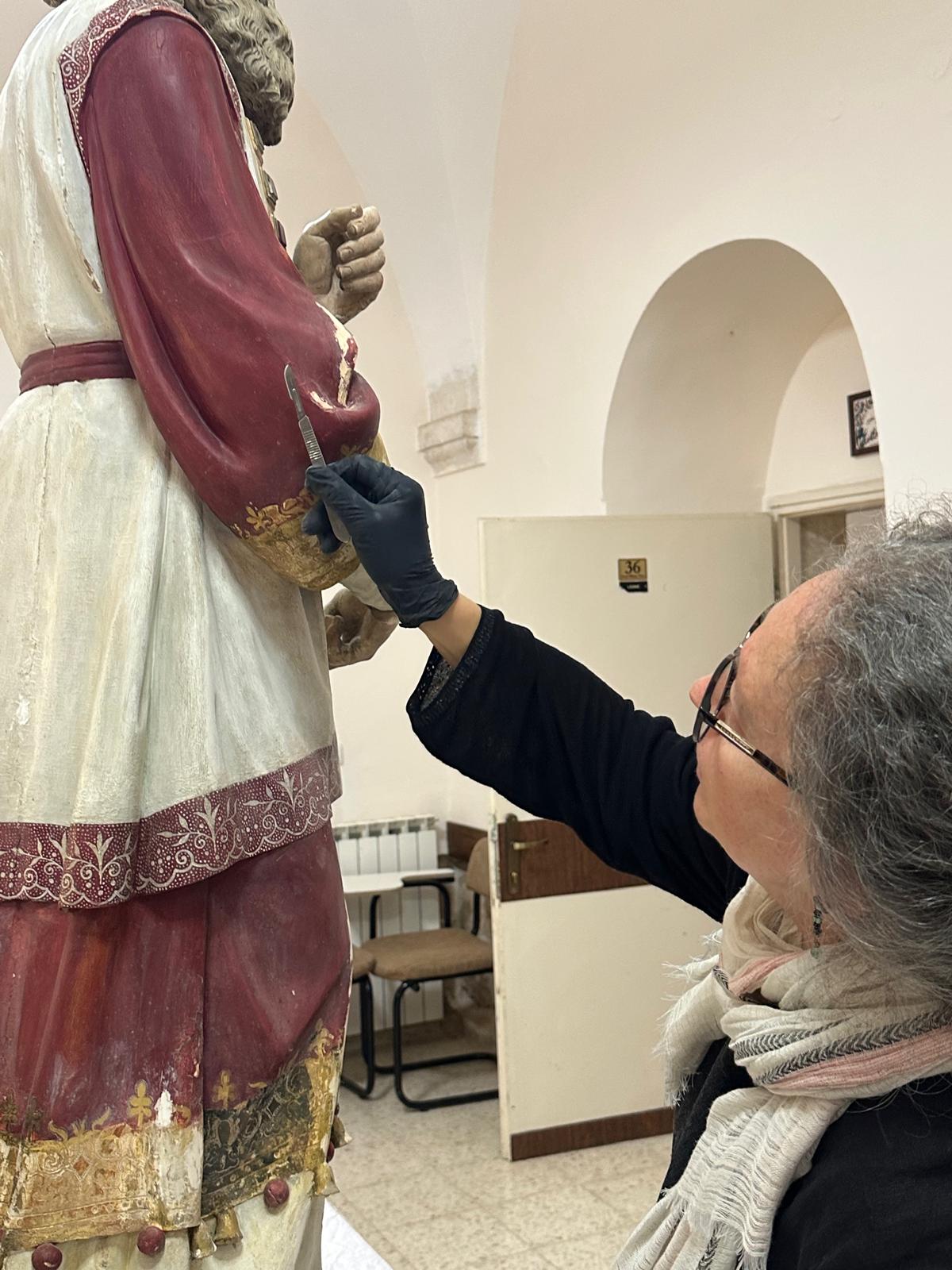
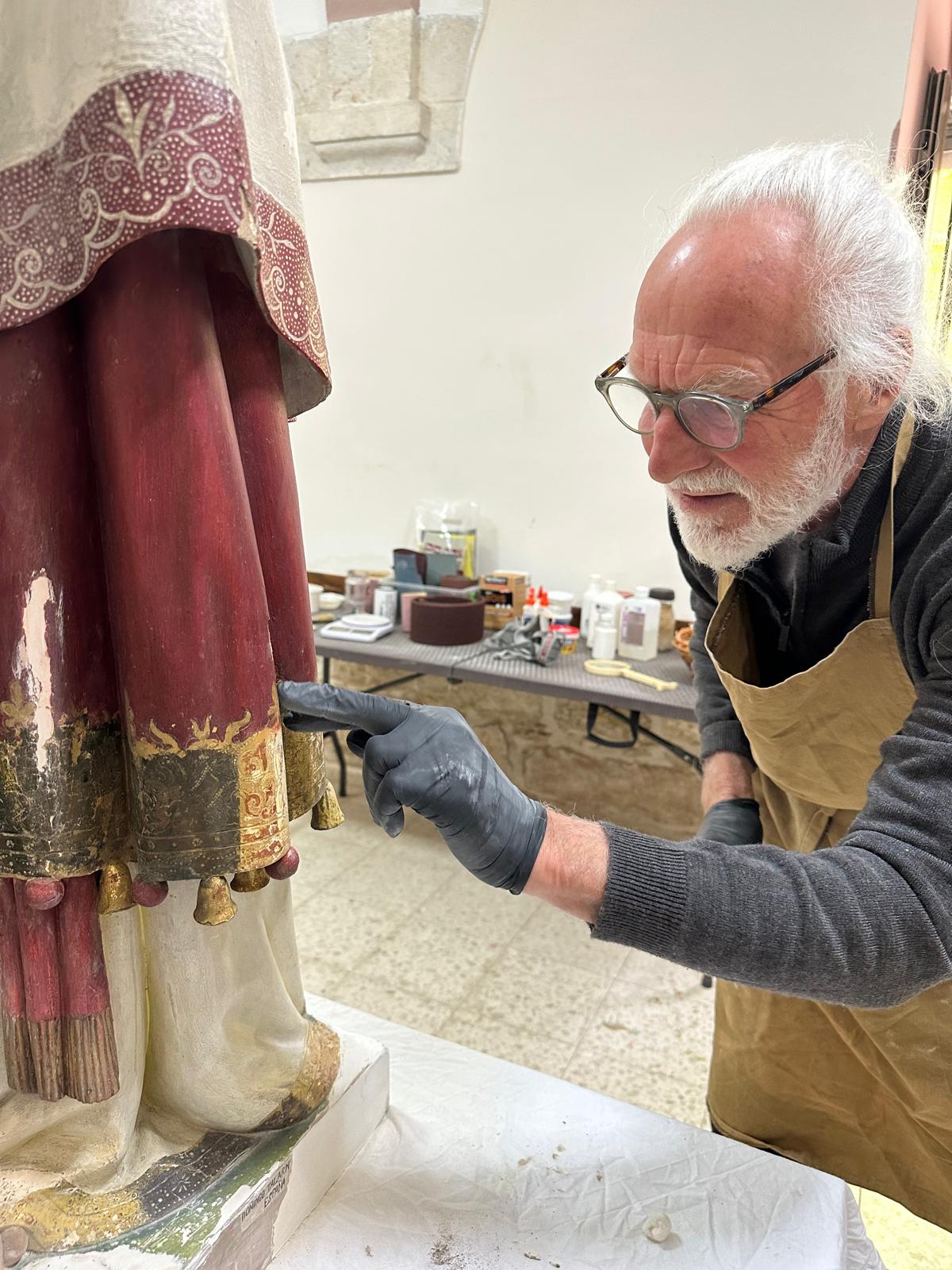
We usually work in the restoration laboratories of the Custody, fully immersed in historic Jerusalem. This time, however, in Ein Karem, at the Franciscan convent of Saint John the Baptist, we are restoring the statues of Saint John, Saint Elizabeth, and Zechariah.
Every restoration is full of discoveries, unexpected events, technical challenges, and difficulties that often require a certain degree of creativity to solve. Even materials are a challenge: most restoration products and specific solvents are almost impossible to find here, if not entirely prohibited from trade. Whenever I return from Italy, I now make sure to bring a suitcase full of materials: Bologna chalk, bole, rabbit-skin glue, ox gall…
What makes work and life different between Jerusalem and Ein Karem?
We are grateful for the opportunity to experience this evocative place. Being welcomed into a monastery allows us to share a little of the daily life of the Franciscan community. Denis also loves this place: it is immersed in nature, peaceful, and every day reveals something new. Nevertheless, I am deeply attached to Jerusalem and I miss it as a city, even though we usually live surrounded by nature in France, far from urban life, almost like hermits.
But here, when I arrive in Jerusalem, I breathe deeply: it feels like coming home. It is a strange sensation that goes beyond work… the atmosphere is different. The Holy Sepulchre, the market, the entire neighborhood: I truly feel at home here. I miss it a little, I must admit. Still, Ein Karem is beautiful: there is space, there is nature. For us, these two experiences complement rather than contradict one another. Ideally, we would now spend one month in Ein Karem and one month in Jerusalem.
What can this profession teach today’s fast-paced society, which is increasingly impatient?
The new generations of restorers learn a little bit of everything, but often spend more time behind computers than in contact with materials themselves. We have the impression that technology is making us more disconnected, whereas art, contemplation, and real contact with things remain essential.
Last question: what is the greatest challenge or satisfaction in your work?
For us, this is not really a job, but rather a temporary mission in which, fortunately, I can still make the best use of my training as a restorer.
Certainly, the greatest satisfaction comes from seeing the original harmony of a statue gradually return; it is always an immense joy, almost like bringing it back to life.
Restoring the Mater Dolorosa for the Holy Sepulchre was even more special, because you feel the full responsibility and devotional power these works hold for people: it is not merely matter to restore; there is also a profoundly human and spiritual dimension.
Whether you are a believer or not, you are touched by it. The spiritual intensity and significance these works hold for those around you reaches everyone.